

Introduction: The Silent Crisis in the Office
A silent crisis is unfolding in workplaces across India and the world. It’s more than just stress, it’s a pervasive state of exhaustion that has reached epidemic levels. A recent Deloitte survey revealed that a staggering 80% of the Indian workforce reported facing mental health challenges, a clear indicator of a system under immense pressure. This widespread distress has a name: corporate burnout.
For years, burnout was dismissed as a personal issue, a simple case of someone not being able to “hack it.” However, the global health community has now officially weighed in. The World Health Organization (WHO) has formally recognized burnout in its International Classification of Diseases (ICD-11) as an “occupational phenomenon,” defining it as a syndrome resulting from chronic workplace stress that has not been successfully managed.
This distinction is critical. By classifying it as an occupational issue, the WHO places the source of the problem squarely in the workplace environment, not on the individual. Understanding this distinction is the first step toward finding a genuine solution. This article will dissect the anatomy of burnout and set the stage for a powerful, evidence-based preventive tool: mindfulness.
Deconstructing Burnout: The Three Core Dimensions
To effectively combat burnout, we must first understand its distinct components. The most respected scientific framework comes from social psychologist Christina Maslach, whose work provides the foundation for the Maslach Burnout Inventory (MBI), the leading tool for measuring burnout. According to Maslach, burnout is not a single feeling but a combination of three debilitating dimensions.
First is overwhelming exhaustion. This is a profound depletion that goes far beyond normal fatigue. It’s an emotional and physical emptiness, akin to a car’s engine running on fumes for so long that it finally seizes. An employee experiencing this may feel drained before their workday even begins, struggling with the energy to face tasks that were once routine.
Next is the dimension of cynicism or depersonalization. This manifests as an emotional and mental detachment from one’s job. A once-engaged employee might become irritable, negative, or develop a callous disregard for their work and colleagues. This cynicism acts as a psychological buffer, a way to protect oneself from the overwhelming demands of the job by disengaging from it entirely.
Finally, burnout culminates in a reduced sense of professional efficacy. This is a creeping feeling of incompetence and a lack of achievement. Despite past successes, the individual begins to doubt their abilities and question their impact, feeling that their work no longer matters. This self-doubt feeds the cycle of exhaustion and cynicism, creating a downward spiral that can be difficult to escape.

The Root Causes: Why Are We Burning Out?
A common misconception is that burnout is a sign of personal weakness or an inability to manage stress. However, decades of research from pioneers like Maslach and Michael Leiter tell a different story. Burnout is not an individual failing, it is an organizational dysfunction. Their work, detailed in publications like the Harvard Business Review, identifies six key mismatches between an employee and their work environment that are the primary drivers of burnout.
These mismatches include an unmanageable workload, a perceived lack of control or autonomy over one’s work, and an insufficient system of rewards, which includes not just salary but also recognition and praise. Furthermore, a breakdown of community, an absence of fairness where favouritism or injustice is rampant, and a conflict between an employee’s personal values and the company’s mission are all significant contributors.
When these organizational issues are persistent, they erode an employee’s engagement and well-being. Therefore, any meaningful solution must go beyond simply telling employees to be more resilient. It requires looking at the system itself while simultaneously equipping individuals with the tools to navigate its inherent pressures.
Mindfulness as a Neurological and Psychological Antidote
Demystifying Mindfulness: Beyond the Hype
In corporate circles across India today, “mindfulness” has become a ubiquitous buzzword, often associated with wellness apps and stress-reduction seminars. While these are useful entry points, they can sometimes obscure the profound science behind the practice. To understand its power in preventing burnout, we must look beyond the hype and toward its clinical definition.
The modern, secular concept of mindfulness was pioneered by Jon Kabat-Zinn at the University of Massachusetts Medical School. He defines it as “awareness that arises through paying attention, on purpose, in the present moment, non-judgmentally.” This is not about emptying the mind or stopping all thoughts, a common misconception that makes the practice seem impossible.
Instead, think of it as changing your relationship with your thoughts. Imagine your mind is a busy intersection with cars (your thoughts and emotions) constantly rushing through. Instead of standing in the middle of the traffic and getting hit by every vehicle, mindfulness teaches you to sit calmly on a nearby bench and simply observe the cars as they pass. It is an active form of mental training, not passive relaxation.
The Neuroscience of Prevention: Rewiring the Brain
The most compelling case for mindfulness comes from the field of neuroscience. Thanks to technologies like functional magnetic resonance imaging (fMRI), scientists can now see that mindfulness practice doesn’t just make you feel better, it physically changes the structure and function of your brain. This capacity for change is known as neuroplasticity.
A key area of change is the amygdala, the brain’s primal threat detector. In a state of chronic stress, the amygdala becomes overactive, like a hyper-sensitive smoke alarm that goes off at the slightest provocation, triggering the “fight-or-flight” response. Groundbreaking research from Harvard neuroscientist Sara Lazar and others has shown that consistent mindfulness practice can reduce the gray matter density of the amygdala. This effectively calms the brain’s alarm system, making us less emotionally reactive to workplace stressors.
Simultaneously, mindfulness strengthens the prefrontal cortex, the area of the brain right behind the forehead. This region is the brain’s “CEO,” responsible for executive functions like emotional regulation, concentration, and wise decision-making. The very same studies show that mindfulness practice can increase the thickness of the prefrontal cortex. A stronger PFC acts as a direct countermeasure to burnout symptoms, improving focus to combat reduced efficacy and regulating emotional impulses that fuel cynicism.
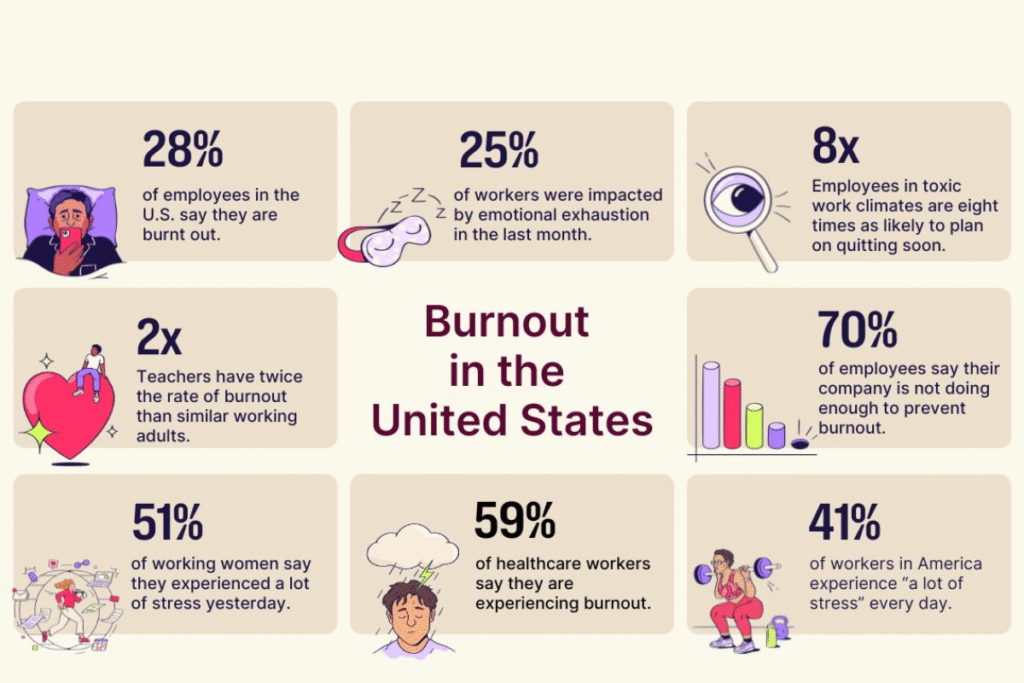
These statistics highlight the widespread nature of burnout and underscore the critical gap between employee needs and corporate action.
The Psychological Mechanisms: How Mindfulness Builds Resilience
These neurological changes create powerful psychological shifts that directly address the three dimensions of burnout. The practice builds mental habits that foster resilience, giving employees an internal toolkit to navigate the pressures of the modern workplace.
One of the most immediate benefits is the ability to interrupt the cycle of rumination. Rumination is the tendency to get stuck in repetitive, negative thought loops, replaying a difficult conversation with a manager or worrying about an upcoming deadline. Mindfulness trains our metacognition, the ability to notice our thoughts as they happen. This awareness allows us to step out of the loop, preventing the mental exhaustion it causes.
This leads to enhanced emotional regulation. By strengthening the connection between the prefrontal cortex and the amygdala, mindfulness creates a crucial pause between a stressful trigger and our reaction. Instead of immediately reacting with anger or anxiety to a critical email, we gain the mental space to observe the emotion, take a breath, and choose a more measured and effective response.
Finally, and perhaps most importantly, mindfulness cultivates self-compassion, a concept extensively researched by Dr. Kristin Neff. Self-compassion is the practice of treating ourselves with the same kindness we would offer a friend who is struggling. It is the direct antidote to the feelings of inadequacy and self-criticism inherent in the “reduced professional efficacy” dimension of burnout. By noticing our harsh inner critic, we can learn to respond with understanding, actively protecting our sense of self-worth and preventing the slide into helplessness.
From Theory to Practice: Mindfulness in the Workplace
The Individual Toolkit: Practical Mindfulness Exercises
Understanding the science behind mindfulness is the first step, but its true value is unlocked through practice. The good news is that integrating mindfulness into a hectic corporate schedule does not require hours of silent meditation. It is a skill built through consistent, brief, and accessible exercises that can be woven into the fabric of any workday.
For “formal practice,” which involves setting aside dedicated time, one of the most effective tools is the 3-Minute Breathing Space. It’s a powerful reset button for a stressed mind. The exercise involves first acknowledging your current thoughts and feelings, then narrowing your focus entirely to the physical sensation of your breath, and finally, expanding that awareness to your entire body. It is a structured pause that can shift your entire mental state between back-to-back meetings.
Even more crucial for long-term prevention is “informal practice,” or bringing mindful awareness to routine activities. This could be as simple as mindfully sipping your morning cup of chai, paying full attention to its aroma, warmth, and taste instead of scrolling through emails. It could be taking a five-minute walk around the office campus, focusing on the sensation of your feet on the ground rather than ruminating on a work problem.
For moments of acute stress, a simple and memorable tool is the S.T.O.P. technique. When a stressful notification appears or a difficult conversation begins, you can: Stop what you are doing, Take a conscious breath, Observe your internal state without judgment, and then Proceed with more intention. Tools like popular apps Headspace and Calm have also made guided versions of these exercises readily available to employees everywhere.
The Organizational Mandate: Creating a Mindful Culture
While individual tools are empowering, they can only do so much if the environment remains a constant source of stress. To truly prevent burnout, the focus must shift from merely “fixing the employee” to actively “improving the workplace.” Placing the entire burden of resilience on the individual in a toxic system is not a sustainable strategy.
This cultural shift must begin with leadership. When a CEO, director, or team leader openly practices mindfulness and discusses its benefits, it sends a powerful message that mental well-being is a core business priority, not just an HR checkbox. This authentic buy-in dismantles stigma and encourages wider adoption far more effectively than any top-down mandate.
Forward-thinking organizations in India and globally are now embedding mindfulness into their operations. This includes practical steps like offering subsidized subscriptions to mindfulness apps, creating designated “quiet rooms” or wellness spaces for employees to decompress, and training managers in mindful communication. A mindful manager learns to listen fully in one-on-ones and deliver feedback constructively, directly reducing team stress and fostering psychological safety.
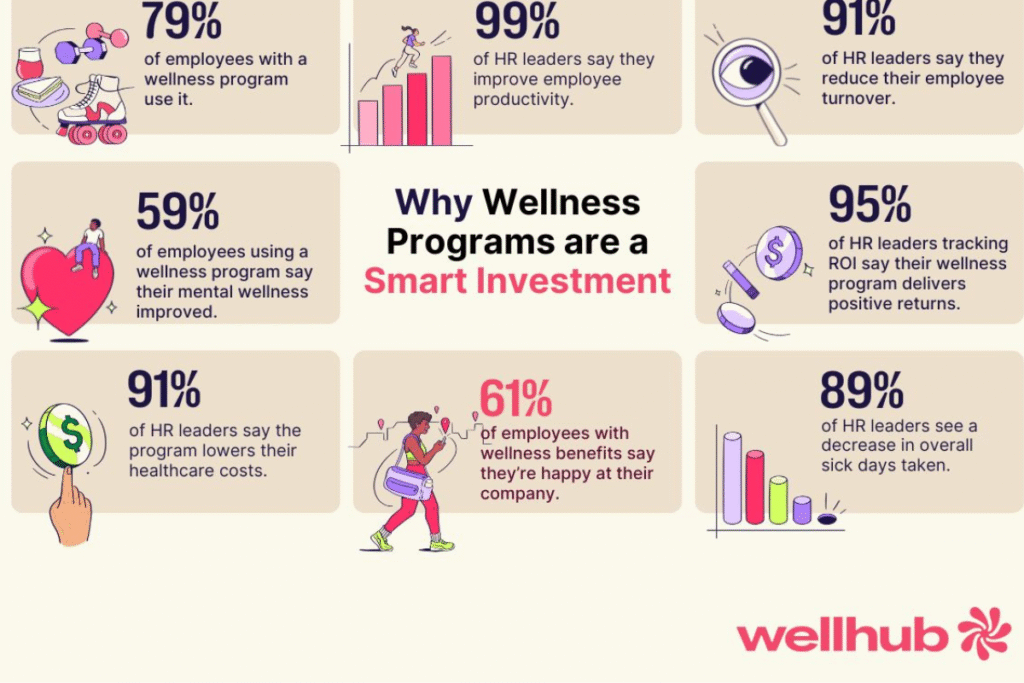
Data shows that corporate wellness programs are not just a perk, but a strategic investment that yields significant returns in productivity and employee retention.
Case Studies: Mindfulness in Action
The world’s most innovative companies are providing clear proof that investing in mindfulness yields a significant return. They are no longer asking if it works, but are instead measuring its powerful impact on both their people and their bottom line.
Google’s “Search Inside Yourself” (SIY) program is a landmark example. Originating within Google, this leadership training fused mindfulness with emotional intelligence. The goal was not just to reduce stress but to cultivate resilient, empathetic, and self-aware leaders. Participants reported a greater ability to stay calm under pressure and improved collaborative skills. The program was so successful it was spun off into the independent Search Inside Yourself Leadership Institute, which now trains organizations worldwide.
Another powerful case comes from the US healthcare company Aetna. The company offered voluntary mindfulness and yoga programs to its 55,000 employees and partnered with Duke University to study the results. The data was astounding: participants reported a 28% decrease in stress levels and a 20% improvement in sleep quality. Most compellingly, Aetna calculated that these well-being improvements led to a productivity gain of 62 minutes per employee per week, translating to an annual value of $3,000 per employee.
On a global scale, software giant SAP has demonstrated how to embed mindfulness into a massive corporate culture. With a dedicated Global Mindfulness Practice and tens of thousands of employees trained, SAP has meticulously tracked its impact. The company reports direct correlations between participation in its mindfulness programs and increases in employee engagement, higher leadership trust scores, and a remarkable 200% estimated return on investment. These cases prove that mindfulness is not a soft perk, it’s a strategic imperative for a healthy and high-performing organization.
A Balanced Perspective and the Path Forward
The Caveat: Avoiding “Mindfulness Washing”
As mindfulness gains traction in the Indian corporate sector, a critical note of caution is essential. While the benefits are clear, there is a growing risk of “mindfulness washing,” a term for when companies offer wellness tools as a superficial fix for deep-seated organizational problems. This approach is not only ineffective, it can also breed immense cynicism among employees.
Offering a mindfulness app to employees who are consistently overworked and under supported is like handing a small bucket to the crew of a sinking ship. It fails to address the real issue, which is the gaping hole in the hull. Mindfulness should not be used to help employees tolerate a toxic or unsustainable work environment. When used this way, it can be perceived as the management shifting the burden of stress onto the individual, rather than taking responsibility for the conditions causing it.
Furthermore, for mindfulness to be effective, its adoption must be voluntary. Mandating participation can turn a practice of liberation into just another corporate chore, stripping it of its power and authenticity. The goal is empowerment, not enforced compliance.

The Synergy of Solutions
The most crucial takeaway for any leader reading this is that mindfulness is not a panacea, it is a powerful partner. It becomes truly transformative when it is integrated into a dual strategy that addresses both the organization and the individual. Burnout is a systemic problem that demands a systemic solution.
The first part of this strategy involves improving organizational health. This means leaders must courageously address the root causes of burnout discussed earlier, such as unmanageable workloads, lack of autonomy, and unfair practices. This could involve implementing clearer policies on work hours, promoting a culture where taking leave is encouraged, and training managers to be more supportive.
The second part is equipping employees with resilience tools, which is where mindfulness excels. While the organization works on reducing stressors (the hardware), mindfulness helps employees upgrade their internal operating system (the software) to better navigate the pressures that inevitably remain. It is the synergy between a healthier workplace and a more resilient workforce that creates a truly burnout-proof culture.
Conclusion
The evidence is clear: corporate burnout is an occupational crisis with devastating costs for both individuals and businesses. It is defined by exhaustion, cynicism, and inefficacy, and it is rooted in the workplace environment itself. Yet, as neuroscience has shown, we have a remarkable opportunity to counter its effects by training the mind.
Mindfulness offers a scientifically validated, practical, and profound pathway to prevention. It rewires the brain for resilience, enhances emotional regulation, and fosters the self-compassion needed to thrive under pressure. As demonstrated by global leaders like Google, Aetna, and SAP, this is not a speculative wellness trend, it is a strategic investment in human capital with a measurable return.
Frequently Asked Questions
What exactly is corporate burnout?
Burnout is not just stress, it is an occupational phenomenon officially recognized by the World Health Organization (WHO). It is defined as a syndrome resulting from chronic, unmanaged workplace stress, characterized by three specific dimensions: overwhelming exhaustion, cynicism towards one’s job, and a sense of reduced professional efficacy.
Isn’t burnout just another term for feeling overworked?
While an unmanageable workload is a major cause, burnout is a more complex state. It also involves your emotional connection to your work (cynicism) and your belief in your own abilities (efficacy). You can be overworked and stressed without being cynical or feeling incompetent, but when all three dimensions are present, it signals true burnout.
Is the company or the employee responsible for burnout?
The article, supported by decades of research from experts like Christina Maslach, makes it clear that burnout is primarily an organizational issue, not an individual failing. It stems from systemic problems like excessive workload, lack of control, and unfairness. The responsibility lies with the organization to fix the environment.
What is mindfulness, and do I have to be spiritual to practice it?
Mindfulness, in this context, is a completely secular and scientific form of mental training. It is defined by Jon Kabat-Zinn as “awareness that arises through paying attention, on purpose, in the present moment, non-judgmentally.” It is not a religious practice and requires no specific beliefs, it is simply a way of training your focus and awareness.
How does mindfulness scientifically help prevent burnout?
Neuroscience shows that mindfulness physically rewires the brain. It helps reduce the reactivity of the amygdala (the brain’s “threat detector”), making you less emotionally hijacked by stress. It also strengthens the prefrontal cortex (the brain’s “CEO”), improving focus, emotional regulation, and decision-making, which directly counters the symptoms of burnout.
What is “mindfulness washing” and how can I spot it?
“Mindfulness washing” is when a company uses mindfulness programs as a superficial “band-aid” to mask a toxic work culture. You can spot it when a company offers wellness apps or meditation classes while ignoring the root causes of stress, such as unrealistic deadlines, long work hours, and poor management.
Can mindfulness solve fundamental problems like an excessive workload?
No. Mindfulness is a tool for individual resilience, not a substitute for good management and fair company policies. The most effective strategy combines organizational changes (like workload assessments and promoting work-life balance) with providing mindfulness tools to help employees manage the inevitable pressures that remain.
What is a simple mindfulness exercise I can do at my desk?
The “3-Minute Breathing Space” is a perfect example. For three minutes, you can (1) acknowledge your current thoughts and feelings, (2) narrow your focus entirely to the sensation of your breath, and (3) expand your awareness to your whole body. It’s a powerful way to reset your mind during a busy day.
Is there real financial proof that mindfulness programs benefit a company?
Yes. The article cites major case studies. For example, healthcare company Aetna calculated a productivity gain worth $3,000 per employee per year from its program. Software giant SAP reported a 200% return on investment from its global mindfulness initiative through increased engagement and productivity.
What is the S.T.O.P. technique mentioned in the article?
It’s a simple, in-the-moment tool for managing acute stress. When you feel overwhelmed, you can: Stop what you’re doing, Take a conscious breath, Observe your thoughts and feelings without judgment, and then Proceed with more clarity and intention.
How is self-compassion related to preventing burnout?
Self-compassion, as researched by Dr. Kristin Neff, is the practice of treating yourself with kindness when you struggle or feel inadequate. It is a direct antidote to the “reduced professional efficacy” dimension of burnout, which is often fueled by a harsh inner critic.
What was Google’s “Search Inside Yourself” program?
It was a pioneering leadership training program developed at Google that combined mindfulness with emotional intelligence. Its goal was to create more resilient, self-aware, and empathetic leaders, and it was so successful that it has become a globally recognized leadership institute.
Can a company just provide a mindfulness app and consider the job done?
While providing access to apps like Headspace or Calm is a good first step, it is not a comprehensive strategy. For mindfulness to become part of the culture, it requires leadership buy-in, role-modelling, and integration with broader organizational changes that support employee well-being.
What is the difference between formal and informal mindfulness practice?
Formal practice means setting aside specific time to meditate, like the 3-Minute Breathing Space. Informal practice involves bringing mindful awareness to everyday activities, such as drinking a cup of tea, walking between meetings, or listening to a colleague without distraction.
How does mindfulness help with the cynicism component of burnout?
Cynicism is often a defence mechanism against feeling overwhelmed. By enhancing emotional regulation, mindfulness allows you to observe feelings of frustration or irritation without being consumed by them. This creates the mental space to respond more constructively, rather than defaulting to detachment and negativity.
Is mindfulness a replacement for professional mental health support like therapy?
Absolutely not. Mindfulness is a powerful tool for well-being and stress management, but it is not a treatment for clinical conditions like depression or anxiety disorders. It can be a complementary practice, but it does not replace the need for a qualified therapist or counsellor.
What is the role of the amygdala in burnout?
The amygdala is the brain’s alarm system. Chronic stress makes it hyper-reactive, keeping you in a constant state of “fight-or-flight,” which leads to physical and emotional exhaustion. Mindfulness has been shown to reduce the amygdala’s reactivity, calming this alarm system.
What is the most important thing a leader can do to support a mindful culture?
The most important thing is to lead by example. When leaders openly practice mindfulness, talk about its benefits, and demonstrate qualities like calm and empathetic communication, they make it psychologically safe for their teams to prioritize their own well-being.
Can being forced to practice mindfulness be counterproductive?
Yes. Participation in mindfulness initiatives should always be voluntary. Mandating it can turn a practice of self-care into another source of pressure and obligation, which is the opposite of its intended purpose.
What is the ultimate goal of implementing mindfulness in the workplace?
The ultimate goal is to create a dual-impact: to foster a healthier, more psychologically safe organizational culture while simultaneously empowering individual employees with the mental and emotional skills to not just survive the pressures of modern work, but to actively thrive within it.
~ Authored by Abhijeet Priyadarshi
