

Your Brain Runs on Oxygen, Not Willpower
We often talk about pushing ourselves mentally, as if willpower is all it takes to power through stress, ace a test, or get things done. But here’s a truth few people realize: your brain doesn’t run on willpower. It runs on oxygen. Your mental clarity, decision-making, and focus are directly tied to how much oxygen your brain is getting. And when you’re stressed? That oxygen supply drops dramatically.
Stress triggers the fight-or-flight response, and one of the first things that happens is your body redirects oxygen and energy away from your prefrontal cortex (the thinking, rational part of your brain) and into your limbs and survival systems. In this state, clear thought becomes harder. You might feel foggy, confused, or impulsive. That’s not a lack of intelligence, it’s a lack of oxygen.
Calm, controlled breathing becomes the gateway to regaining mental clarity. When you breathe slowly and rhythmically, you increase the flow of oxygen to the brain, especially the higher-order areas that govern reasoning, memory, and decision-making. In effect, the quality of your thoughts rises with the quality of your breath. It’s not about forcing yourself to stay focused or productive through sheer will; it’s about supporting your physiology so your brain can operate at its best.
It also reframes how we think about mental performance. Instead of treating your breath as background noise or an unconscious function, see it as a tool, a deliberate, accessible way to supercharge your brain. By tapping into breath awareness, you’re not just improving your health. You’re improving your intelligence in real time.
Modern neuroscience backs this up. Oxygen is essential for neuronal communication. Even slight fluctuations in oxygen availability can impact cognitive performance. So, if you’re ever struggling to concentrate or remember something, it’s not necessarily a motivation issue, it might just be that your brain isn’t getting enough air. Recognizing this can free you from guilt and guide you toward smarter, more sustainable habits.
Stress Makes Your Breath Fast and Shallow
Think about the last time you felt anxious. Did your chest tighten? Did you feel breathless or like you couldn’t take a full inhale? That’s not a coincidence. Stress changes your breathing. It becomes faster, shallower, and often moves up to the chest rather than the diaphragm. You may even start breathing through your mouth, which activates more sympathetic (stress) nervous system responses.
This type of breathing creates a feedback loop: stress makes your breath shallow, and shallow breath reinforces the stress. Your body and brain go into a loop of rising tension, reduced oxygen, and mental fog. In this state, it’s not just harder to think, it’s harder to even stay aware of your mental state. You become reactive, edgy, and emotionally volatile.
Understanding this loop empowers you to interrupt it. The moment you become aware of your breathing pattern during stress, you can begin to reverse the spiral. Instead of staying trapped in the shallow breath cycle, you can introduce slowness and depth. This not only brings calm but also stops the cascade of stress hormones.
This insight is crucial for students, professionals, athletes ORanyone who faces pressure. By shifting your breath, you shift your brain. The beauty is that your breath is always with you, always available, waiting to be used deliberately. That awareness is where calm begins.
Over time, many people lose the ability to breathe well. Slouched postures, long hours at desks, and chronic stress all teach the body to breathe inefficiently. Mouth breathing becomes a habit. And with it comes a host of cognitive and physical side effects: sleep disturbances, fatigue, irritability, and lower mental stamina. Re-learning how to breathe deeply and fully becomes a form of mental hygiene. It is the most direct way to switch off the body’s stress response and switch on calm.
Genius Breathing Is Slow, Deep, and Rhythmic
So how does a “genius” breathe? Slowly. Deeply. Rhythmically. Instead of quick, shallow breaths from the upper chest, genius breathing pulls air deep into the belly (diaphragmatic breathing) and lets it out with control. This type of breath activates your parasympathetic nervous system body’s natural “rest and digest” mode.
The ideal pattern? In through the nose, out through the nose or mouth gently, without rush or strain. No loud gasping, no puffing. Just a silent, steady rhythm. Think of it like a calm ocean wave: predictable, smooth, and endlessly restoring.
Training yourself in this breathing style is like giving your brain a constant stream of fuel. It ensures that oxygen reaches even the smallest capillaries and energizes your cells. More importantly, it communicates to your body that you’re safe. This message alone rewires your default settings from “survive” to “thrive.”
The effects go beyond mental clarity. Rhythmic breathing has been linked to better digestion, reduced inflammation, improved sleep, and even greater emotional regulation. The mind-body connection becomes tangible when you master your breath. Genius breathing isn’t just a method, it’s a lifestyle shift toward calm confidence.
Consider how rhythmic breath serves elite performers. Musicians, athletes, public speakers, even emergency responders, each of them trains breath to control their inner state. Breath becomes a metronome that keeps them steady while the world speeds up. The same principle applies to studying, writing, debating, or creative problem-solving. By aligning your breath, you steady your mind. The result? Clearer ideas, more persuasive words, and faster learning.
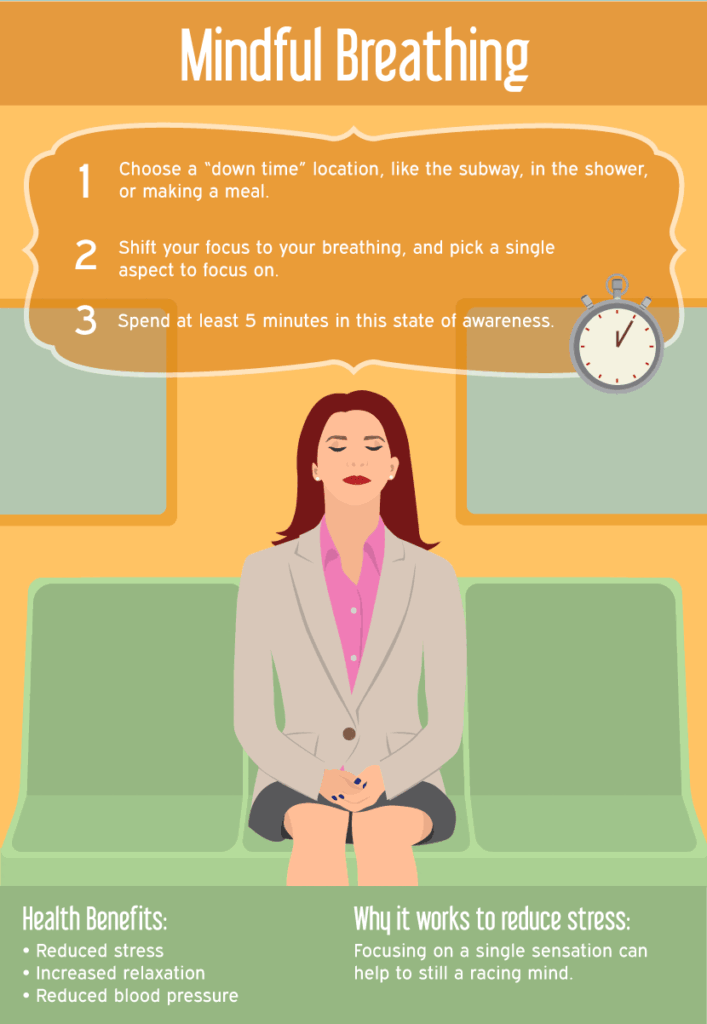
Deep breathing isn’t just calming—it’s healing. It may lower blood pressure, ease headaches, and support relief from anxiety, IBS, and depression symptom
Use the 4–6 Method for Fast Results
One of the simplest and most powerful ways to shift into genius breathing is the 4–6 method: inhale for 4 seconds, exhale for 6. Why is this effective? The extended exhale activates your vagus nerve, which helps slow the heart rate and ease your mind.
This pattern creates an immediate physiological shift. You begin to feel your shoulders drop, your jaw unclench, and your mental chatter quiet down. In less than a minute, your nervous system flips from “on” to “balanced.” Practicing this just five to ten times before a big moment can make a noticeable difference.
You can use it before high-stress situations, exams, interviews, performances, even arguments. It gives your brain space to prepare instead of panic. You become more present, more observant, and less emotionally hijacked by the moment.
What makes the 4–6 method powerful is its portability. You can do it anywhere, anytime. Standing in line, sitting in class, waiting for a meeting no one even has to know. It’s a stealth technique for mental mastery, and it becomes more potent the more you practice it.
This breath ratio is also supported by science. Longer exhalations stimulate the parasympathetic nervous system more efficiently. They help clear carbon dioxide buildup, improve heart rate variability, and calm erratic brain waves. In less technical terms, it’s like tuning your body like an instrument: a few precise breaths, and you’re ready to perform at your best.
Pair It With Silence for Double Impact
While breathwork alone is powerful, pairing it with silence takes things to another level. In a world constantly buzzing with noise, screens, and stress, a few minutes of stillness is like a brain spa. Sit still. Close your eyes. Breathe deeply using the 4–6 rhythm. Let your thoughts come and go, but keep your body calm and your breath steady.
In this silence, something magical happens. The noise inside your head starts to match the calm outside. Your thoughts slow down, allowing clarity and insight to rise to the surface. This space of silence combined with conscious breath opens the door to deep focus and flow.
Doing this before homework, revision, or problem-solving can significantly sharpen your concentration. It creates a clean mental slate. Your brain shifts from scattered to structured. Studies show that even short periods of mindful breathing can enhance working memory and cognitive flexibility.
This isn’t meditation in the traditional sense, no need to “clear your mind” or chant. Just breathe in silence. With practice, these few minutes will become your superpower. Over time, it trains your brain to associate silence with readiness and insight. You walk into a task not just prepared, but mentally aligned.
Silence also gives your sensory systems a break. When you remove visual, auditory, and digital input, your brain’s energy can be directed inward. Reflection, problem-solving, memory consolidation all flourish in silent space. Combine that with breath, and you’ve created the perfect cognitive incubator for genius-level thinking.
I Use This When I Feel Foggy or Anxious
Let me share a personal story. There was a day I had back-to-back meetings, an overwhelming to-do list, and a pounding headache from stress. I sat at my desk and couldn’t focus on a single thing. I felt anxious, unprepared, and on the verge of snapping.
Instead of pushing through, I paused. I sat back, closed my eyes, and did ten rounds of the 4–6 breath. Inhale four. Exhale six. Slowly, gently. Within two minutes, something shifted. My heart rate slowed. My thoughts became clearer. The noise inside my head faded, and I felt grounded again.
I didn’t “feel ready” when I started breathing. But I didn’t need to. Genius breathing meets you where you are and brings you back to balance. It doesn’t wait for motivation. It creates it.
Since then, breath has become my go-to rescue tool. Whether it’s pre-presentation jitters, post-argument adrenaline, or the blank fog of burnout, I know breath can bring me back. It’s not just a theory. It’s a lived, practiced habit that works every time I return to it.
Breath isn’t about escaping your problems, it’s about facing them with a calmer mind. And once you do, solutions appear where stress used to be.
Each breath acts like a gentle reminder: you are in control. No matter the chaos around you, this simple act grounds you in the present. Over time, this habit becomes automatic. In times of anxiety, your body starts to initiate the calming breath even before your conscious mind catches up. That’s when you know you’re not just practicing genius breathing you’ve internalized it as a superpower.
Do It Before Studying, Don’t Just Jump In
Breathing is more than just a stress response, it’s a preparation tool. Before diving into studying, take a moment to breathe. Just 2–3 minutes of slow breathing can boost your focus dramatically. It calms the nervous system, clears background noise in your head, and sets the stage for deep concentration. When your mind is present, your memory works better. When you’re focused, you need less time to learn more effectively.
Imagine going into a study session with a racing mind. You sit, but your thoughts are still on the conversation you had earlier, the notification you just checked, or the upcoming exam. In that state, even the simplest tasks feel overwhelming. Now imagine the difference if you took three minutes to reset your breath and body. Your mind steadies, your attention sharpens, and the same study material now feels manageable.
Athletes warm up before a race. Musicians tune their instruments before a performance. Your brain deserves the same ritual. Breathing is that ritual. It prepares your mental environment for peak performance. Don’t skip it.
This also saves you time in the long run. A distracted 30-minute study session can be replaced by a focused 15-minute one. That’s the efficiency of presence. And presence starts with breath.
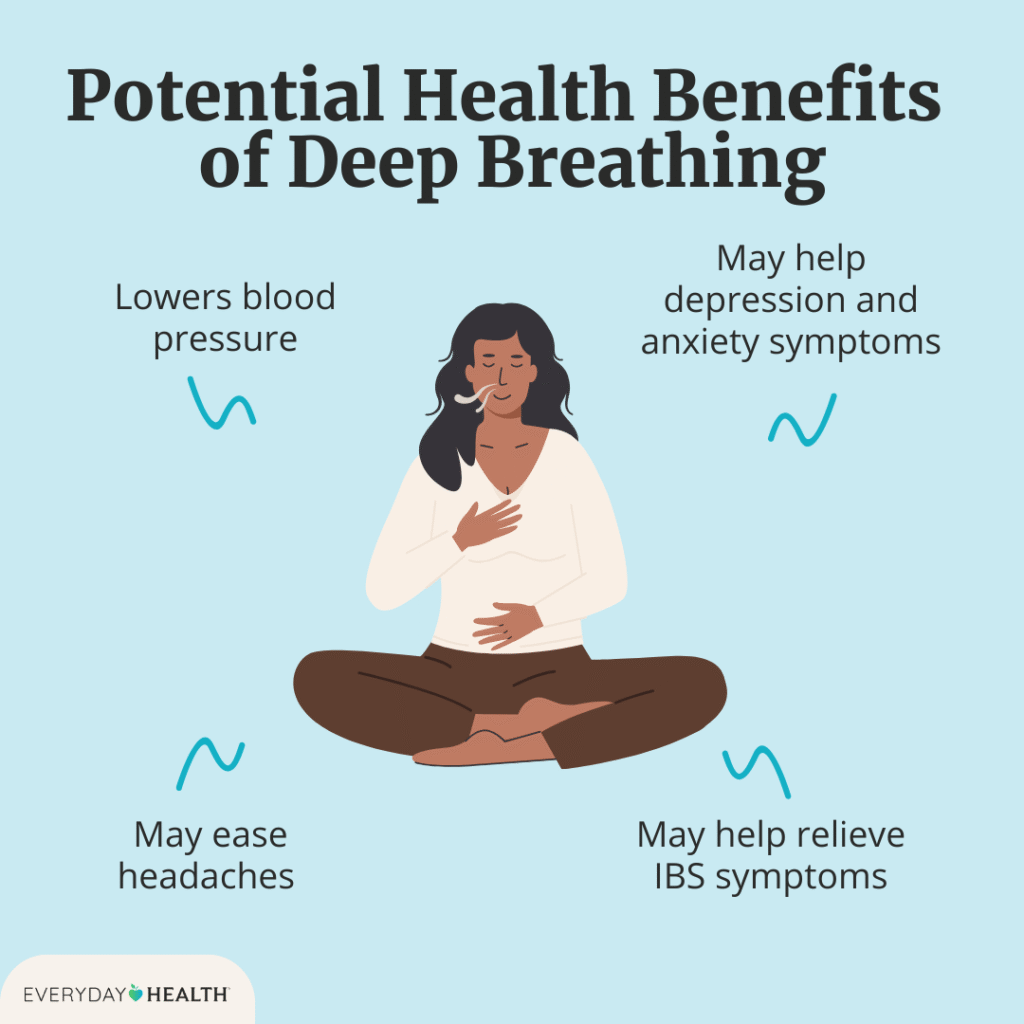
Mindful breathing transforms everyday moments into calm resets. Just five focused minutes can lower stress, blood pressure, and mental clutter.
Use It When You’re About to Snap or Blank
Everyone knows the moment: you’re in a heated conversation, a high-pressure exam, or a group discussion and suddenly your brain blanks. Or worse, you feel your temper boiling. The words come out wrong. You either shut down or lash out. That split-second reaction can ruin an entire interaction.
But here’s the genius move: one breath. One slow inhale. One long exhale. It gives you five seconds to regroup, to re-center, and to respond not react.
In fights, tests, or onstage moments, this pause becomes priceless. It allows space for thought. It interrupts emotional spirals. And it often prevents regret. That one breath might be what saves your answer, your grade, or even your friendship.
People often feel they can’t control their reactions in high-pressure moments. But you can. You just need training and breath is that training. Every time you choose breath over reaction, you’re building emotional resilience.
This isn’t just emotional regulation. It’s performance mastery. Whether you’re debating, pitching, or answering a tough question, those few seconds of breath can elevate your clarity and your impact.
Most People Waste Their Breath, You Can Train Yours
The average person breathes over 20,000 times a day but how many of those breaths are conscious, calm, and useful? Most are shallow, chest-based, and automatic. In effect, people waste their breath. They miss the opportunity to train one of the most powerful tools for focus, energy, and inner peace.
But the good news? Breath can be trained. Just like muscles respond to exercise, your breath patterns respond to awareness. Start with a few minutes daily. Focus on slow inhales, longer exhales. Feel your belly rise. Notice the space between breaths. That’s where mastery begins.
As you train, you’ll notice shifts: deeper sleep, quicker recall, calmer reactions. You won’t just breathe better, you’ll think better. Genius isn’t just about IQ. It’s about presence, regulation, and the ability to control your inner world even when the outer world gets chaotic.
Breathe Like a Genius. Think Like One Too.
You already have everything you need. No app. No gear. Just awareness. Breath is free, instant, and available right now. Use it as your launchpad into a smarter, calmer, more focused version of yourself.
This is your first habit of mental mastery. Every great thinker, scientist, philosophers, leaders has found ways to regulate their inner state before changing the outer one. They began with breath. Before their genius manifested in ideas, words, or actions, it was nurtured in moments of internal quiet. That stillness wasn’t passive; it was potent, powerful, and intentional. It allowed them to respond rather than react, to create instead of collapse.
Breathing like a genius means choosing presence over panic, rhythm over rush. It means using your breath not just to survive, but to thrive. Each conscious breath becomes a vote for clarity, composure, and creativity. And when practiced consistently, this habit builds a new identity: someone who doesn’t just think brilliantly under pressure but lives with grounded confidence.
Don’t wait for stress to push you into awareness. Start practicing now. Inhale calm. Exhale clutter. Think clearly. React slowly. Move from autopilot to intention. Breathe like a genius. And step into the version of yourself you’ve always known was possible. You don’t have to be extraordinary to begin. But you will become extraordinary because you did.
Frequently Asked Questions; Breathe Like a Genius: How One Simple Habit Boosts Focus, Memory, and Calm
What is genius breathing?
Genius breathing refers to slow, deep, rhythmic breathing that increases oxygen to the brain and supports calm, focused thinking.
Why does my brain feel foggy when I’m stressed?
Stress reduces oxygen flow to your prefrontal cortex, which impairs clear thinking and decision-making.
How does breathing improve focus?
Deep breathing boosts oxygen to your brain, calming your nervous system and helping you concentrate more effectively.
What’s the 4–6 breathing method?
It’s a technique where you inhale for 4 seconds and exhale for 6, which helps activate the body’s calming system.
Can breathwork help with anxiety?
Yes, slow and controlled breathing reduces the physical symptoms of anxiety and helps the brain feel safer and more stable.
Is it better to breathe through the nose or mouth?
Breathing through the nose is generally better, it filters air, supports diaphragm function, and keeps breathing calmer and quieter.
Why is shallow breathing harmful?
Shallow breathing limits oxygen flow and activates the body’s stress response, which can lead to fatigue, anxiety, and poor focus.
How often should I practice genius breathing?
Even just 2–3 minutes a few times a day, especially before tasks or when stressed can make a big difference.
Can I use this technique before exams or presentations?
Absolutely. Genius breathing helps calm nerves, boost memory, and steady your performance under pressure.
How does silence improve the effects of breathing?
Silence removes distractions and helps your mind settle, amplifying the calming and focusing benefits of breathwork.
Do I need an app to do this breathing technique?
No. Genius breathing is free, simple, and doesn’t require any tools, just your awareness and a few minutes of time.
Is this the same as meditation?
Not exactly. Genius breathing is more focused on breath control and clarity than traditional meditation, and is easier to start with.
Can children or students use this method?
Yes. It’s especially helpful for students to use before studying, tests, or public speaking to improve focus and recall.
What does it mean to ‘train your breath’?
Training your breath means practicing awareness and control so that calm breathing becomes your default even under stress.
Does this work for emotional outbursts or anger?
Yes. Taking a slow breath before reacting gives you time to pause and respond wisely rather than impulsively.
Can breathwork improve memory?
Yes, calm breathing helps bring your mind into the present, which improves both short-term focus and long-term memory retention.
What physical signs show that my breathing is too shallow?
You may notice chest tightness, rapid breaths, sighing often, or feeling breathless even at rest.
Is this backed by science?
Yes. Studies show that slow, deep breathing improves oxygenation, heart rate variability, and brain performance.
How long before I notice results?
You may feel calmer within 60 seconds, and with consistent practice, you’ll notice better focus, sleep, and mood over time.
Why is breath called a ‘reset button’?
Because every conscious breath has the power to interrupt stress, restore calm, and bring you back to clarity instantly.
– Authored by Sohila Gill