

Genius Isn’t Born, It’s Built
Most people picture genius as a flash of brilliance. A sudden answer in a math class or a perfect performance under pressure. But real genius isn’t magic. It’s maintenance. The sharpest minds don’t wait for luck or motivation. They create it through daily habits that strengthen their brain like a muscle.
Mental clarity, emotional calm, and steady focus aren’t personality traits. They’re trained abilities, shaped by how you start your morning, respond to stress, and wind down at night. It’s not about adding more to your schedule, it’s about changing how you move through it. Genius grows in small, repeated choices.
You don’t need expensive tools, elite coaches, or hours of free time. What you need is a simple rhythm-tiny, intentional acts repeated with consistency. One breath, one moment of reflection, one mindset shift at a time. That’s where real transformation begins.
Your Brain Runs Better on Routines Than Luck
Focus, calm, and creativity don’t just appear when you need them. They’re not lightning strikes of genius, they’re skills that get stronger through routine. The brain thrives on patterns. The more you repeat certain actions, the easier they become for your mind to access.
When your day has structure, your brain doesn’t waste energy wondering what’s next. It settles into a rhythm, which boosts mental clarity and emotional balance. Without structure, your brain is constantly reacting and that leads to fatigue and distraction.
Think of your brain like an athlete. It needs warm-ups, rest, and consistent drills. Random efforts don’t build results. But routines-no matter how small-create long-term changes. Tiny habits become mental reflexes over time.
The way you start and end your day matters more than you think. Even five minutes of breathing, journaling, or reflection can rewire how your brain handles stress, focus, and decisions.
You don’t need a perfect day. You just need a repeatable one. Genius isn’t found in chaos. It’s built through quiet, daily rituals that sharpen your thinking and strengthen your emotional core.
Start Your Day With One Breath and One Word
The way you begin your day sets the tone for everything that follows. Instead of diving straight into noise, messages, or stress, try this: sit still, close your eyes, and take three slow, deep breaths. It’s a simple act, but it wakes up your mind and body gently—without chaos.
After breathing, choose one word to carry through your day. It could be “Focus,” “Flow,” “Calm,” “Confidence,” or even “Joy.” This word becomes your anchor-a quiet intention that keeps you steady when things get noisy or stressful.
This practice might seem small, but your brain is listening. Neuroscience shows that intention-setting activates areas related to decision-making and self-control. That single word helps align your thoughts, actions, and energy.
In a world full of distractions, your best advantage is starting with clarity. One breath. One word. That’s how you choose your mindset, before the world chooses it for you.
Take Micro-Breaks Every 40–50 Minutes
Your brain isn’t built for nonstop focus. After about 40 to 50 minutes, mental energy starts to fade, and attention gets scattered. That’s not laziness-it’s biology. Just like muscles, your brain needs short breaks to recharge and refocus.
A micro-break doesn’t mean picking up your phone or opening another tab. In fact, that adds to the overload. Instead, take 2 to 5 minutes to sit still, stretch, close your eyes, or take a few deep breaths. Let your mind be quiet, even for a moment.
These small pauses may feel unproductive, but they boost your performance over time. They help reset your attention, reduce stress, and restore your energy. Think of them as fuel stops for your brain.
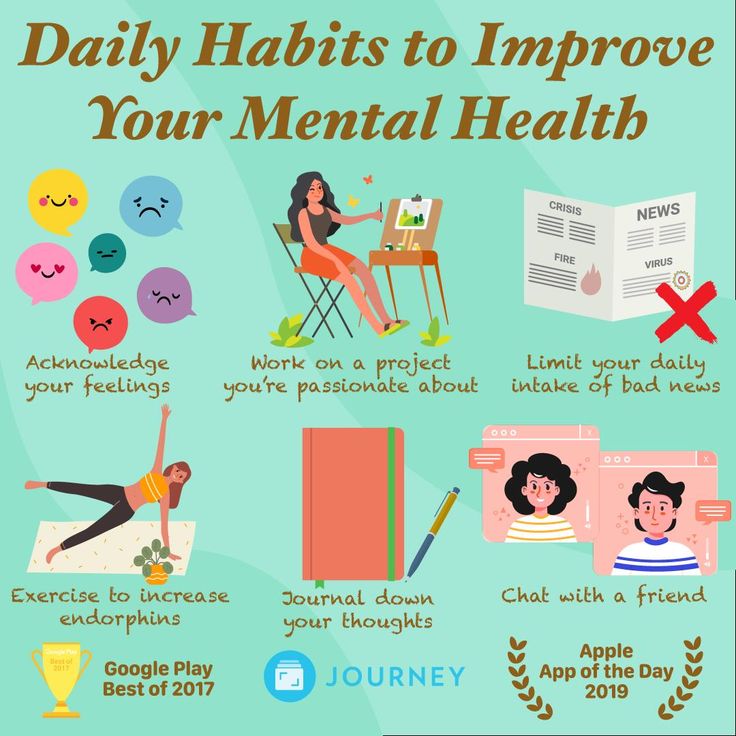
This infographic highlights six daily habits to boost mental health, including journaling, chatting with friends, and limiting negative news. It emphasizes emotional awareness and activities that naturally lift endorphins like exercise and creative work.
Use Breath Before Every Important Task
Before anything that matters-a test, a presentation, a performance, or even a tough conversation-pause and breathe. Your brain can’t operate at full power if your body is tense or rushing. Breath is the bridge between your body and mind.
Try this: inhale through your nose for 4 seconds, then exhale slowly through your mouth for 6 seconds. Do this three times. This small shift tells your nervous system, “I’m safe. I’m ready.”
You don’t need to “psych yourself up”, you need to center yourself. Deep breathing slows your heart rate, clears mental fog, and sharpens your focus. It pulls you out of anxiety and into control.
Make it a ritual: before any high-stakes moment, use breath as your reset button. It’s free, always with you, and surprisingly powerful. You’ll notice your mind shows up clearer, steadier, and more prepared because you gave it time to arrive.
After School, Do a “Mental Check-In”
The school day can feel like a blur-classes, conversations, tasks, and emotions all piling up. Before you dive into homework or distractions, take two minutes to pause. Ask yourself: How was my focus today? What was my mood like? Did anything throw me off?
This small reflection builds a powerful habit: self-awareness. It’s not about judging your day, but noticing it. Maybe you were distracted in math but focused during art. Maybe your energy dipped after lunch. These patterns matter.
Over time, this daily check-in helps you understand how your mind and emotions work. You’ll start noticing what environments help you focus, what drains you, and what lifts your mood. That awareness is a superpower.
Most importantly, it gives you a chance to course-correct. Bad day? Learn from it. Good day? Reinforce it. This habit turns your day into feedback, and feedback into growth.
Reflect Before Bed, Not Scroll
Most people end their day by mindlessly scrolling through their phones. While it feels like relaxing, it actually floods your brain with stimulation and comparison. Instead of winding down, your mind stays alert, distracted, and restless.
A simple, more powerful habit is to pause and reflect. Write down one thing you handled well today. It could be something you finished, a problem you solved, or even just showing up. This trains your brain to notice progress instead of pressure.
Reflection builds confidence, gratitude, and emotional strength. Even a quick note helps you end the day on a positive, self-supporting tone. It reminds you that effort matters more than perfection.
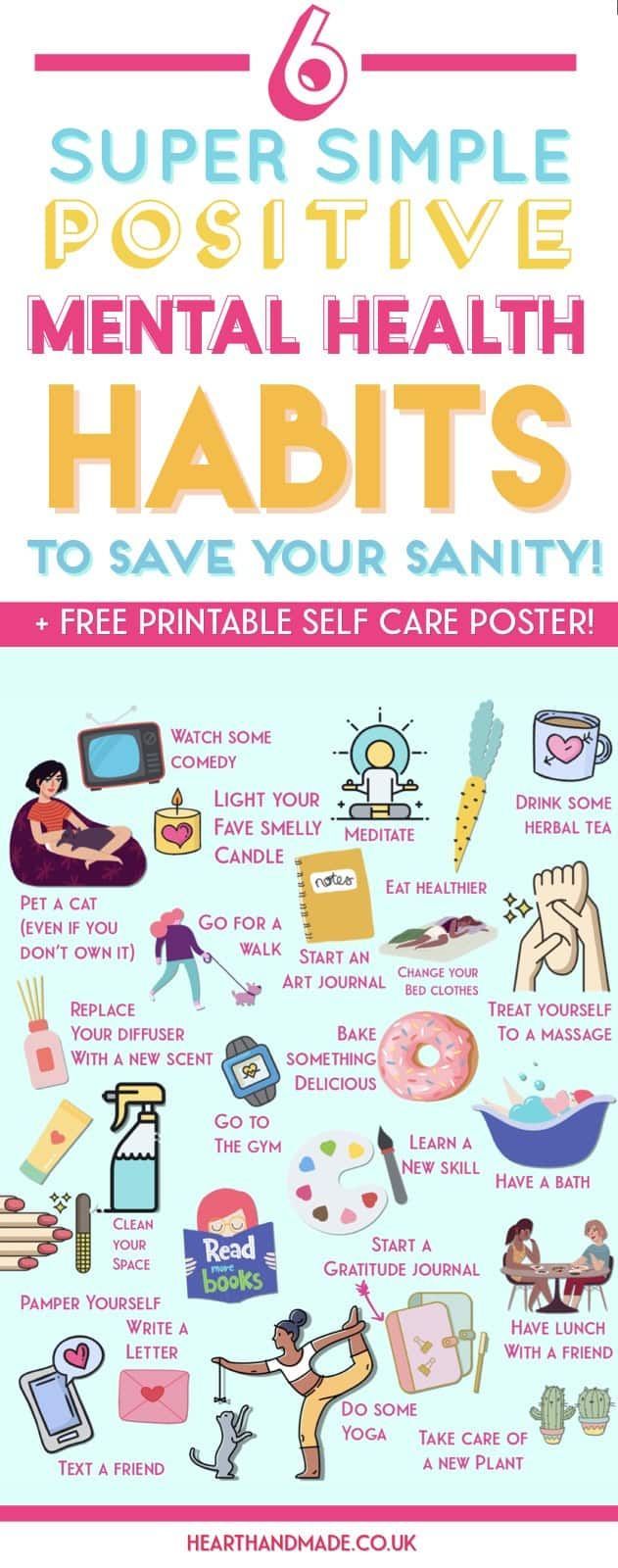
This vibrant infographic offers 6 super simple habits to support positive mental health and emotional balance. It highlights fun, low-effort self-care practices like journaling, yoga, comedy, and tea to help preserve your sanity.
Cut the Chaos With a Simple Night Routine
Your brain can’t instantly switch from stimulation to sleep. It needs a soft landing. Yet most people stay on screens until the moment they close their eyes, wondering why they feel restless. This digital overload keeps the nervous system alert, not relaxed.
A simple wind-down ritual can change everything. Just 15 minutes before bed, power down your devices and step away from noise. Replace screen time with silence, a book, or even dim lighting to signal your body that it’s time to rest.
Use slow breathing to shift your system into calm mode. Inhale gently for 4 seconds, exhale for 6. You can even whisper a word like “release” or “peace” as you breathe out and it grounds you.
This small shift resets your mental state after a busy day. It helps your brain recover, recharge, and prepare for another sharp, emotionally strong tomorrow. Night routines aren’t boring–they’re brain fuel.
Train One Inner Skill Per Week
Just like athletes train their muscles, your mind needs regular training too.
Instead of trying to improve everything at once, focus on just one inner skill per week—like patience, focus, calm, or confidence.
It’s simple: each day, notice how well you practiced it.
Ask yourself, “How did I do today?”
Turning mental growth into a game makes it more engaging.
You’re not just hoping to become calmer, you’re tracking it like progress.
Some days you’ll slip. Other days, you’ll surprise yourself.
That’s how real change happens–slowly, then suddenly.
This habit builds emotional strength the same way a gym builds physical strength.
It gives you a sense of control over your inner world.
And with each week, you sharpen a different part of your mindset toolkit.
In a few months, you’ve trained 10–12 powerful traits without burnout.
That’s quiet self-mastery in motion.
Genius Habits Are Invisible but Powerful
The world celebrates outcomes–good grades, sharp memory, confident speeches. But what it doesn’t see are the tiny, quiet routines behind them. Mental strength is built behind the scenes, not in the spotlight.
Genius isn’t about having superpowers. It’s about doing the simple things–breathing before a task, taking breaks, reflecting at night–consistently, even when no one’s watching. These actions look small, but they build the brain’s foundation.
Top performers in every field have rituals. They don’t rely on mood or motivation. They rely on structure. That’s why they stay focused when others panic and stay calm when others react.
The most powerful habits are often invisible. No applause, no trophies. But over time, they shape who you become. Quiet routines create loud results.
So don’t underestimate your small efforts. If your mind feels stronger this month than last, it’s working. The genius is already growing, even if no one else sees it yet.
Your Mind Is Your Best Friend, If You Train It
Most people spend their lives battling their own minds–fighting anxiety, overthinking, or distraction. But here’s the truth: your mind isn’t the enemy. It’s a powerful ally, if you learn how to guide it.
Think of your thoughts like wild horses. Untrained, they’ll pull you in every direction. But with daily practice, even just 3 minutes, you can steer your mental energy where you want it to go.
Start by noticing your thoughts, not reacting to them. Use breath to calm the chaos. Then gently redirect your attention to your intention, your one-word focus, your task, or your goal.
You don’t need fancy tools or hours of meditation. Just one moment of training each day builds mental strength. Over time, your mind stops resisting you and starts supporting you.
A trained mind is focused, flexible, and calm under pressure. That’s what real genius looks like–not frantic brilliance, but quiet control.
Start with One Breath
Genius doesn’t come from chaos, it comes from clarity, and clarity is built through small, intentional habits. You don’t need to change everything overnight. You just need to begin. And the simplest place to start? One breath.
Each habit in this routine is a tool—not for perfection, but for progress. Whether it’s setting a morning intention, taking a silent break, or reflecting before bed, these actions strengthen your mental and emotional core. They create space in your day, and in your mind.
Over time, the effects compound. You become more focused, less reactive, and better equipped to handle stress. You don’t just “get smarter”, you build a mind that works with you, not against you.
Start with one breath. Then one word. Then one habit. These small steps are how you train your brain to think clearer, feel calmer, and live stronger. That’s the genius routine. Quiet, steady, and powerful.
FAQs on The Genius Routine: Daily Habits That Build Mental Sharpness and Emotional Strength
What is “The Genius Routine”?
It’s a set of simple, daily habits designed to build mental clarity, emotional strength, and long-term focus through breathwork, reflection, and mindful routines.
Is this routine only for students or professionals?
No, it’s for anyone who wants to sharpen their thinking and build inner calm—students, working adults, creatives, or anyone under stress.
How much time does this routine take daily?
Just a few minutes. Most habits are 2–5 minutes each and can be integrated into your existing day.
Do I have to follow all 10 habits at once?
Not at all. Start with 1–2 that feel natural. Once they stick, you can build from there.
Why is breath such a big part of this routine?
Breath directly influences your nervous system. It’s the fastest way to calm your mind and increase focus.
Is there scientific evidence behind these habits?
Yes. Practices like deep breathing, mindfulness, and journaling are backed by research for improving cognition, emotional regulation, and sleep quality.
How do micro-breaks improve brain function?
Short breaks reduce mental fatigue, improve memory retention, and restore attention, especially when done without screens.
What’s the benefit of setting a “word of the day”?
It activates the brain’s default mode network and guides unconscious attention. This “priming” makes you more intentional throughout the day.
Why does reflection at night help sleep?
Positive reflection reduces cortisol and anxiety, making it easier for your body to relax and fall asleep.
What does “training one inner skill per week” do?
It builds emotional intelligence and self-awareness, which are key to performance, relationships, and resilience.
How do I choose my “word of the day”?
Pick a quality you want to embody that day—like “Focus,” “Calm,” “Courage,” or “Clarity.” Keep it simple.
What do I do during micro-breaks if I can’t leave my desk?
Close your eyes, stretch your hands or neck, take deep breaths, or simply sit in silence. No scrolling.
What’s a good example of a “mental check-in” after school/work?
Ask: “How was my focus today? Did I feel calm or rushed? What drained or boosted my energy?”
What should I write during my bedtime reflection?
One thing you did well today—even if small. It could be handling stress, showing kindness, or staying focused.
What’s a quick night routine to wind down?
Turn off screens 15 minutes early, dim the lights, take 3 deep breaths, and say an intention like “Let go.”
What if I forget to do the routine some days?
That’s fine. Consistency matters more than perfection. Just return to it the next day without guilt.
Can this routine help with anxiety or overthinking?
Yes. Many elements (like breath, check-ins, and reflection) reduce anxious thinking and improve emotional control.
Do I need to meditate for this to work?
No. While meditation can help, this routine uses simpler, more accessible practices anyone can do anytime.
How long before I start seeing results?
Most people notice improved calm and focus within a week. Long-term benefits come from consistency over months.
What’s the ultimate goal of the Genius Routine?
To help you build a mind that’s sharp, calm, and resilient—so you can perform better, feel better, and grow stronger every day.
~Authored by Aishwarya Galagali