

Success Starts in the Brain—Before It Shows Up in Results
Before any external success appears—in your career, finances, or relationships—it begins as a pattern in your brain. Neuroscience confirms that our thoughts trigger a cascade of neural signals that influence actions and ultimately, results. This is why cultivating a growth-oriented mindset can be more powerful than any temporary motivation. Success is built from the inside out, not the other way around.
Focused thinking creates better decision-making pathways by influencing your prefrontal cortex—the brain’s center for planning and reasoning. When you train yourself to focus on possibility rather than limitation, you’re literally reinforcing the neural highways that lead to better choices. Studies in neuroplasticity show how the brain rewires based on repeated thought patterns. It’s not magic—it’s mechanism.
Every intentional action you take is rooted in a mental script. If your inner narrative says “I’m not ready,” your brain will adjust your physiology to hesitate. But if the narrative becomes “I adapt and figure things out,” your actions follow suit. High performers often cultivate such scripts using cognitive-behavioral training and visualization techniques. You don’t act your way into belief—you believe your way into action.
This internal programming shapes your entire perception of reality. When your thinking is limited, even opportunities can feel like threats. But when your thinking expands, problems turn into creative challenges. Training the brain to interpret situations through a solution-focused lens is a foundational success skill, emphasized in both resilience research and leadership development programs.
Ultimately, building your “success circuit” is about consciously rewiring how you think, speak, and act. External outcomes—promotions, profits, recognition—are lagging indicators of internal patterns. When you align your mental architecture with clarity, intention, and self-belief, results become inevitable. Start not by chasing success, but by engineering your internal framework to produce it consistently.
The Brain Learns Best Through Repetition and Emotion
Your brain forms lasting neural circuits through repetition, but repetition alone isn’t enough—it’s emotion that locks in learning. When an experience carries emotional weight, the brain encodes it more deeply. That’s why habit formation becomes stronger when it’s tied to meaning. Neuroscientists call this emotional tagging—and it’s key to mental training.
Every time you visualize a goal with feeling, you’re reinforcing brain pathways that shape behavior. When paired with calm, focused breathing, visualization helps anchor goals into your physiology. Elite performers use mental imagery before stepping into action. This pairing of breath and imagery creates an emotional blueprint for success.
The brain doesn’t distinguish much between imagined and real experiences—what matters is emotional intensity. That’s why a vivid negative thought can trigger stress, while a powerful affirmation can rewire confidence. Repetition with intention, especially when combined with positive emotional states, changes your mental circuitry. This is the basis of techniques like emotional rehearsal.
Your success circuit strengthens when you repeatedly train your mind to feel the future you want. Visualize not just the outcome, but how it feels to achieve it—what you hear, see, and believe. Research on mental simulation and emotional learning shows how this primes your brain for real-world execution. Emotion is the glue—make it part of every mental habit.
Your Habits Become Your Wiring
Every action you repeat reinforces a pattern in your brain. Whether it’s mindless scrolling, self-doubt, or negative self-talk, your brain wires it in as the default. This is due to a process called long-term potentiation, which strengthens neural pathways through repetition. That’s why bad habits feel automatic—they’ve been deeply trained.
The good news is that you can rewire these patterns with deliberate effort. Neuroscience confirms the brain’s ability to change through neuroplasticity, especially when you pair awareness with action. Even simple shifts, like intentional breathing or posture, can redirect your nervous system. By replacing reactive behaviors with grounding techniques, you begin building a new circuit.
Where your attention goes, your brain grows. This concept is central in attention training, which strengthens cognitive control. If you constantly fixate on problems, your brain becomes wired for stress. But if you shift focus to solution-based thinking, creativity circuits light up. Even gratitude journaling helps build a more resilient mental state.
Every habit you form is a reflection of your inner narrative. If you see yourself as someone who follows through, your habits align. The framework of identity-based habits shows how beliefs and behaviors reinforce each other. Daily micro-habits like journaling or stretching can shift your self-image. With consistent action, these become automatic behaviors.
Even tech use affects your mental wiring. Phone overuse, constant notifications, and multitasking reshape your attention span. These stimuli activate dopamine loops, reinforcing impulsive behavior. Instead, practicing digital mindfulness can help restore focus and mental clarity.
Ultimately, your brain is shaped by what you do consistently—not what you intend. This is why building keystone habits like daily reflection or morning routines is powerful. With repetition, you construct new neural pathways that support your goals. Your wiring isn’t fixed—it evolves with every breath, every thought, and every conscious choice.
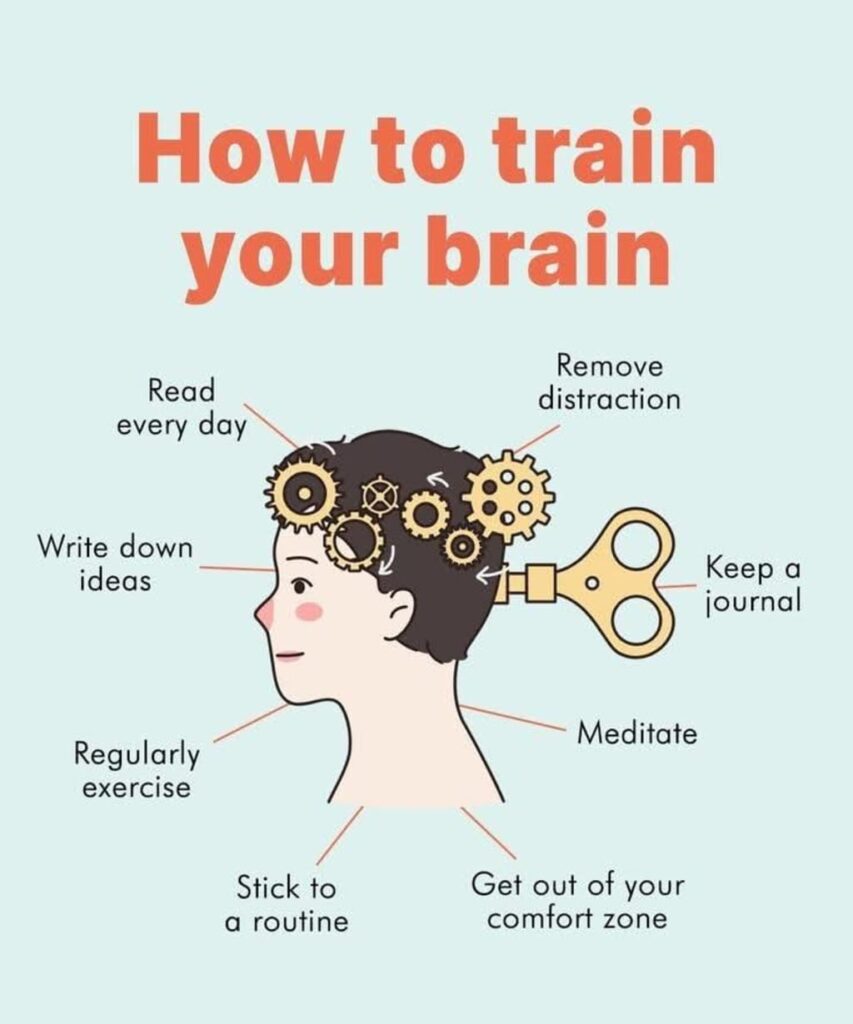
This infographic illustrates practical strategies to enhance brain function and mental sharpness. It emphasizes habits like reading, journaling, exercising, and stepping out of your comfort zone to train your brain effectively.
Mindfulness Helps You Catch Auto-Pilot Thinking
Most people run on mental autopilot without realizing it. The brain’s Default Mode Network (DMN), which activates during mind-wandering, is often dominated by rumination, regret, or self-judgment. These patterns become the backdrop of your daily life. Practicing mindfulness meditation helps interrupt these loops and create conscious space for new thoughts.
Mindfulness trains your brain to recognize thoughts as they arise—without judgment. This allows you to observe patterns like imposter syndrome, anxiety, or procrastination before they take over. Regular practice improves metacognition, helping you notice your thinking from a distance. Tools like body scans and breath awareness anchor you in the present moment.
When you become aware of unconscious thought loops, you regain control over your responses. Instead of reacting impulsively, you can choose how to respond with clarity. Research shows that mindfulness enhances cognitive flexibility, which helps you adapt under stress. It also improves working memory, which supports better decision-making in high-pressure situations.
Interrupting auto-pilot thought patterns is a form of brain training. Each time you catch a negative loop and redirect attention, you’re creating a new mental pathway. Studies in behavioral neuroscience show that awareness weakens old circuits over time. Pairing this awareness with breath regulation makes the shift even more effective.
Mindfulness also supports emotional resilience by increasing activity in the prefrontal cortex and reducing reactivity in the amygdala. This means fewer emotional hijacks and more grounded responses. Over time, it enhances your emotional intelligence, improving both personal and professional relationships. Even short daily practices can yield lasting changes.
By consistently observing your thoughts, you become the driver—not the passenger—of your mind. This awareness is foundational to building your success circuit. Whether through daily journaling or guided mindfulness apps, the goal is conscious thinking. Your future depends not just on what you do—but on what you notice before you do it.
Replace “What If I Fail” With “What If I Win?”
The question “What if I fail?” activates your brain’s fear response, triggering stress hormones like cortisol. This can shrink your ability to think clearly and act boldly. Shifting the question to “What if I win?” engage your reward circuitry instead. It opens up possibility and encourages forward momentum, a technique supported by cognitive reappraisal.
Fear-based thinking limits performance by reinforcing avoidance pathways in the brain. When you constantly imagine worst-case scenarios, you create negative visualization loops. But choosing thoughts rooted in optimism and action builds new neural routes. This is the foundation of positive psychology and its effects on motivation and well-being.
Speaking your empowering thoughts aloud strengthens their neural impact. Saying “I can figure this out” while breathing deeply helps calm your nervous system. This pairing of affirmations and breathwork creates a feedback loop that reinforces belief and stability. It’s a form of embodied cognition, where the body and mind shape each other.
Fear won’t disappear overnight—but you can override it with repetition. Neuroscience shows that thought replacement reshapes brain chemistry over time. Each time you shift from fear to possibility, you weaken old pathways and build new ones. Paired with visualization, this technique trains your brain to expect success.
Reframing fear as fuel turns hesitation into energy. Ask, “What skills will I gain even if I stumble?” or “How will this grow me?” These are classic growth mindset questions that build confidence through curiosity. When fear becomes a signal to lean in—not back—you evolve faster and with more resilience.
By replacing fear-based questions with empowering ones, you train your brain to anticipate positive outcomes. This creates a natural shift toward approach motivation, where you move toward goals instead of avoiding failure. With consistent practice, you’ll notice fear fading into the background. The question is no longer “What if I fail?”—it’s “What if I thrive?”
Train in Mental Rehearsal Like Champions
Elite performers across fields—from Olympians to CEOs—use mental rehearsal to prepare their minds for success. This technique involves imagining success in vivid detail before it happens. Research on motor imagery shows that mental practice activates the same brain regions as physical action. It’s a cornerstone of sports psychology and is also used by creative professionals to enhance confidence and clarity.
When you visualize a goal, your brain forms a mental blueprint—rehearsing the outcome as if it were real. This process strengthens synaptic connections involved in performance and focus. Visualization also triggers dopamine release—the brain’s reward chemical—which motivates action. When paired with emotional intensity, the effects are even more powerful.
To practice, close your eyes, take deep breaths, and imagine your success moment-by-moment. Whether it’s a big presentation or a personal milestone, see it, hear it, and feel it. Neuroscience confirms that mental simulation can improve real-world performance. Many use tools like guided visualization to strengthen this skill daily.
Mental rehearsal also reduces performance anxiety by creating a sense of familiarity. The more you run a scenario in your mind, the less threatening it feels. This technique is shown to improve public speaking, exam confidence, and even athletic performance under pressure. It’s like practicing success before you arrive.
Consistency is key—mental rehearsal works best when done regularly, not just before big events. Studies on neurocognitive training show that short, daily visualization sessions lead to measurable brain changes. Combine this with goal-setting techniques for even more impact. You’re not just daydreaming—you’re installing future success.
Train your brain like a champion by visualizing the best-case scenario, not the worst. This proactive wiring builds mental toughness and primes you for decisive action. Whether you’re launching a project or starting a new habit, rehearse it mentally first. What you visualize repeatedly, your brain starts believing—and achieving.
Use Anchored Breathing Before Big Moments
Anchored breathing is the practice of linking breath to a word, image, or intention. It helps regulate your nervous system while reinforcing a desired mental state. This technique is backed by research on breath control, which shows its ability to calm the brain under pressure. Athletes, performers, and leaders use breath anchoring to stay focused in critical moments.
Breathing with intention activates the parasympathetic nervous system, lowering stress hormones and sharpening clarity. When you inhale while silently repeating a focus word like “steady” or “power,” you reinforce calm confidence. This practice builds a psychophysiological link between breath and mental state. It’s like flipping an internal switch toward readiness.
Anchored breathing also enhances emotional regulation, which is key in high-stakes scenarios. Whether you’re about to speak publicly, pitch an idea, or enter a challenging conversation, this technique keeps your mind centered. Paired with visual cues, it creates a full sensory anchor for calm action. The more often you rehearse it, the faster the brain responds.
You can create a personal anchor by combining breath, mantra, and body posture. For example, try inhaling with the word “clarity,” exhaling with “strength,” while standing grounded. These anchors build a ritual that primes your brain for optimal performance. Research on pre-performance routines shows their effectiveness in boosting consistency and composure.
In moments of pressure, untrained breath can become shallow or erratic—escalating anxiety. Anchored breathing counters this by deepening your breath rhythm and anchoring your focus. Techniques like box breathing or resonance breathing are especially effective in resetting your state quickly. They bring both mind and body into alignment.
Over time, anchored breathing becomes a subconscious success trigger. It rewires your brain to associate pressure with preparation, not panic. With consistent practice, it transforms your default response to challenges. Your breath becomes not just a survival tool, but a performance enhancer—your most portable, powerful anchor for clarity.
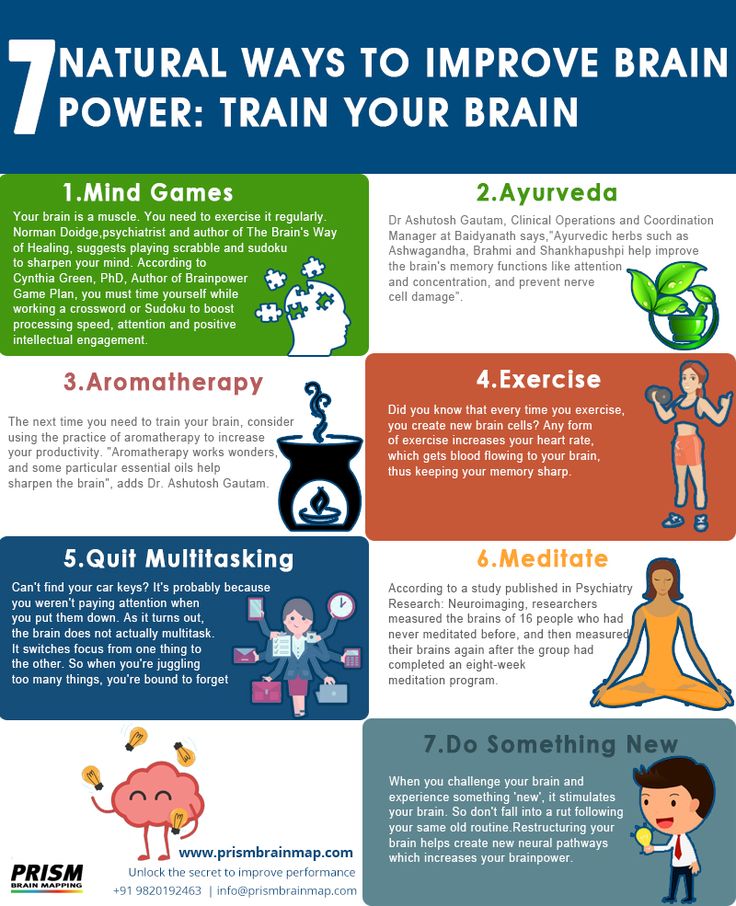
This infographic presents seven natural methods to boost brain power, including techniques like mind games, exercise, meditation, and aromatherapy. It emphasizes simple, science-backed habits to enhance memory, focus, and mental performance.
Keep Track of Wins to Rewire Self-Belief
Tracking your wins—big or small—teaches your brain to notice progress instead of problems. When you log achievements daily, you stimulate your brain’s reward system, which increases motivation. This consistent practice builds self-efficacy, the belief that you can succeed. It’s a proven tool in behavioral psychology for reinforcing positive identity.
Logging even micro-wins helps counter the negativity bias—the brain’s tendency to fixate on what went wrong. A simple “win journal” reminds you of what’s working, not just what’s lacking. Research shows that positive reflection boosts confidence and resilience. When used daily, tools like gratitude logging can reframe your perception of growth.
Each win you record becomes mental proof that you’re capable. This builds a feedback loop where past success reinforces future confidence. According to cognitive-behavioral theory, this repetition rewires limiting beliefs. By focusing on progress rather than perfection, you begin to create a more empowering inner narrative.
This practice also activates the dopamine system, which motivates further effort and focus. Dopamine isn’t just about reward—it’s about anticipating and moving toward goals. When your brain sees success as recurring, it’s more likely to pursue challenges. Tools like habit trackers and visual goal charts enhance this motivation loop.
To strengthen self-belief, review your weekly wins every Sunday or reflect monthly. This builds momentum and creates an upward spiral of motivation. According to identity theory, repeated proof reshapes who you believe you are. The more you affirm your progress, the more aligned your identity becomes with growth.
Self-belief isn’t built from praise—it’s built from patterns. By consciously logging wins, you train your brain to look for strength, not shortfalls. Whether it’s showing up on time, completing a workout, or staying calm in stress, every win counts. Over time, these small recognitions accumulate into an unshakable inner confidence.
Use Setbacks as a Brain Upgrade, Not Failure
Setbacks aren’t signs of failure—they’re moments when your brain is primed to grow. Neuroscience shows that mistakes activate learning by stimulating the anterior cingulate cortex, the part responsible for error detection and adjustment. Instead of judging yourself, use setbacks as feedback loops to build resilience and clarity.
Reflecting on what didn’t go well helps rewire your approach for the future. Tools like cognitive reframing help transform perceived failures into learning data. When you ask “What can I rewire here?” instead of “What went wrong?” your brain shifts from shame to strategy. This is the basis of the growth mindset, which fosters continual improvement.
In challenging moments, emotional regulation is key to staying in learning mode. Practices like mindful breathing and self-compassion calm the reactive brain and restore clarity. These skills activate the prefrontal cortex, allowing for more adaptive responses. Over time, emotional setbacks become training grounds for stronger performance.
Setbacks can also activate creativity by forcing the brain to think differently. Studies show that creative problem-solving often spikes after disruption. When things don’t go as planned, your brain searches for new strategies, connections, and insights. Leaning into discomfort with curiosity builds mental agility and long-term innovation capacity.
Train yourself to document not just wins, but also how you respond to challenges. This builds a narrative of adaptability and grit. Using tools like resilience journals or post-mortem reviews helps you track progress under pressure. Every setback you reflect on becomes a lesson embedded in your success circuitry.
Success isn’t built in the easy moments—it’s forged in how you respond when things fall apart. By viewing setbacks as neuroplastic opportunities, you turn adversity into mastery. Each challenge strengthens your internal system, making your next move wiser and more intentional. Recovery is not the pause—it’s the real training ground.
Your Brain Is the Best Success System You’ll Ever Own
Your brain is not just a thinking machine—it’s a success system that rewires itself based on your daily inputs. Through neuroplasticity, it can adapt, grow, and evolve at any age. The key is to train it with intentional habits that align with your goals. Success doesn’t start with results—it starts with brain patterns you reinforce daily.
The brain thrives on structure and repetition, which is why routines and rituals are powerful performance tools. When you anchor your day with breathing, focus, and reflection, you create a consistent rhythm that supports peak mental function. These habits act as mental scaffolding, helping your brain stay agile and organized under pressure.
Instead of obsessing over external metrics, focus on building the circuit that creates them. Your ability to think clearly, act boldly, and recover fast comes from training your internal system. Experts in cognitive performance emphasize that inner alignment is the foundation of sustainable success. This internal circuitry is more valuable than any tool, degree, or title.
Your attention is your most valuable resource—guard it. Every distraction, worry, or complaint trains your brain away from clarity. Use tools like mindfulness apps and deep work strategies to reclaim focus. Where your attention goes, your future grows—train it with care and purpose.
Think of your brain as your personal operating system. If you update it daily with learning, gratitude, and resilience, it will deliver exponential returns. Tools like brain journaling and mental rehearsal upgrade how you think and feel. Unlike external achievements, this system stays with you forever.
You already own the most advanced success system on Earth—your brain. Train it, fuel it, and guide it consciously. Instead of chasing outcomes, build the neural architecture that makes success inevitable. Begin within, because every external transformation starts with an internal decision to wire your mind for greatness.
Frequently Asked Questions on Build Your Success Circuit: How to Train Your Brain to Think Bigger and Clearer
What does it mean that success starts in the brain?
Success begins with how you think—your mindset, focus, and mental habits create the internal circuitry that shapes your actions and, eventually, your results.
How does focused thinking lead to better outcomes?
Focused thinking activates areas in the brain responsible for planning and decision-making, allowing you to act with clarity and purpose, which directly influences your results.
Why is repetition important for brain rewiring?
The brain strengthens neural pathways through repetition. When habits are repeated—especially with emotional intensity—they become ingrained as automatic responses.
How do emotions affect learning and brain development?
Emotions increase the strength of memory and learning. Emotionally charged experiences engage the brain’s reward and memory systems, making new habits more resilient.
Why is visualization a powerful brain-training tool?
Visualization simulates real-life experiences in the brain. It helps build and reinforce neural networks connected to success, especially when paired with breathing and emotional engagement.
How do daily habits shape brain wiring?
Every repeated action—whether it’s scrolling, worrying, or breathing mindfully—either strengthens or weakens specific neural pathways, forming your default mental patterns.
Can negative habits like overthinking be unlearned?
Yes, through neuroplasticity, the brain can unlearn limiting patterns. Replacing them with intentional, empowering behaviors helps rewire your thought structure over time.
How does mindfulness help identify unconscious thought patterns?
Mindfulness increases metacognitive awareness, allowing you to observe your thoughts without judgment and recognize the loops you run on autopilot.
What’s the benefit of breaking default thought loops?
Breaking default loops gives you control over your mental responses, helping you make more conscious choices and respond to challenges with clarity instead of reactivity.
How can I reframe fear-based thoughts into empowering ones?
You can use techniques like cognitive reappraisal or affirmations to replace “What if I fail?” with “What if I grow?” This rewires the brain toward possibility and action.
Why should I speak empowering thoughts aloud?
Speaking affirmations aloud engages multiple senses and reinforces the belief neurologically, especially when paired with breathing and visualization.
What is mental rehearsal and how does it work?
Mental rehearsal involves imagining success vividly and in detail. The brain processes these imagined experiences similarly to real ones, strengthening neural readiness.
Who uses mental rehearsal in real life?
Olympians, CEOs, artists, and performers all use mental rehearsal to build confidence, reduce anxiety, and enhance performance under pressure.
What is anchored breathing and why is it effective?
Anchored breathing links intentional breath with a focus word or image, creating a consistent emotional state that your brain can automatically access in stressful situations.
How can I create a personalized breath anchor?
Choose a calming word or phrase, combine it with deep rhythmic breathing, and practice it regularly before high-stress events to make it a mental cue for calm.
Why should I track my daily wins?
Tracking wins shifts your focus from shortcomings to progress. This builds confidence circuits in the brain and reinforces a success-oriented identity.
How do micro-wins influence self-belief?
Micro-wins offer frequent evidence of growth. They activate the brain’s reward system and help shift internal narratives from doubt to capability.
How can setbacks be used as brain upgrades?
Setbacks trigger brain mechanisms that support adaptation and growth. Reflecting on them constructively helps rewire the brain for resilience and future success.
What mindset turns failure into growth?
A growth mindset interprets failure as feedback, not a personal flaw. It keeps the brain engaged in learning and rewiring instead of shutting down.
Why is the brain the ultimate success system?
Your brain determines how you think, act, and recover. When you train it intentionally with the right habits, it becomes your most powerful tool for creating lasting success.
~Authored by Barsha