

A truly natural facial uses whole botanical preparations and skilled hands, not synthetic actives and machines. The word “organic” on its own promises less than most people think, so it helps to know what to look for.
This guide explains what “organic” does and doesn’t mean in skincare, how Sunil’s Signature Sculpt™ facial is made, and what to expect from a plant-based organic facial at home in Mumbai.
What does “organic” mean in skincare?
On a label, “organic”, “natural” or “clean” can mean very little unless a certification backs it up. The most widely used standard for natural and organic cosmetics is COSMOS, which is managed by a Belgian non-profit. Certified products carry a COSMOS ORGANIC or COSMOS NATURAL mark alongside the logo of the body that audited them (Cosmetic Lab). Ecocert is one of the founding certification bodies behind the standard.
The thresholds are more specific than most people expect. Under COSMOS, for a leave-on product 95% of the physically processed agricultural ingredients must be organic, and at least 20% of the whole product must be organic. For rinse-off products the whole-product figure is 10% (Soil Association). A COSMOS NATURAL product uses naturally sourced ingredients but need not contain any organic ones.
How to read a label
Look for a named certification mark and the name of the certifier, not just the word “organic”. Check whether the claim is for the whole product or a single ingredient. Treat words like “natural” and “clean” as descriptions, not guarantees.
Where the Signature Sculpt™ facial fits
Sunil’s preparations are made by hand in small batches for each treatment. They are not sold as products, so they do not carry a certification mark. What they offer instead is traceability: whole ingredients from known sources, prepared by the person who applies them.
The six Signature Sculpt™ ingredients
Each ingredient below is described by how it has traditionally been used. None of this is a promise of results, and skin responds differently from person to person.
Nile clay
Clays have long been used in face masks to lift oil from the skin and leave it feeling clean. Sunil procures his clay himself from the River Nile in Egypt.
Ginseng
Ginseng has traditionally been used in East Asian skincare as a tonic for tired-looking skin. Sunil sources it from China and Tibet.
Himalayan neem
Neem has been part of Indian skincare for generations, traditionally used for oily and blemish-prone skin. Sunil uses neem from the Himalayas.
Himalayan rose
Rose water has traditionally been used as a gentle toner and for its fragrance across India and beyond. Sunil’s roses are Himalayan.
Bamboo sap
Bamboo sap comes from Indonesia and gives the preparation a light, fluid texture on the skin.
Japanese natto
Natto is made from fermented soybeans, and fermented ingredients have a long place in Japanese beauty traditions. Sunil ferments his natto fresh and then dehydrates it. Because natto is a soy product, tell him if you have a soy allergy.
Alongside these six, he blends in other botanicals, including Himalayan and Tibetan herbs, some of which he keeps private.
How the botanicals are prepared
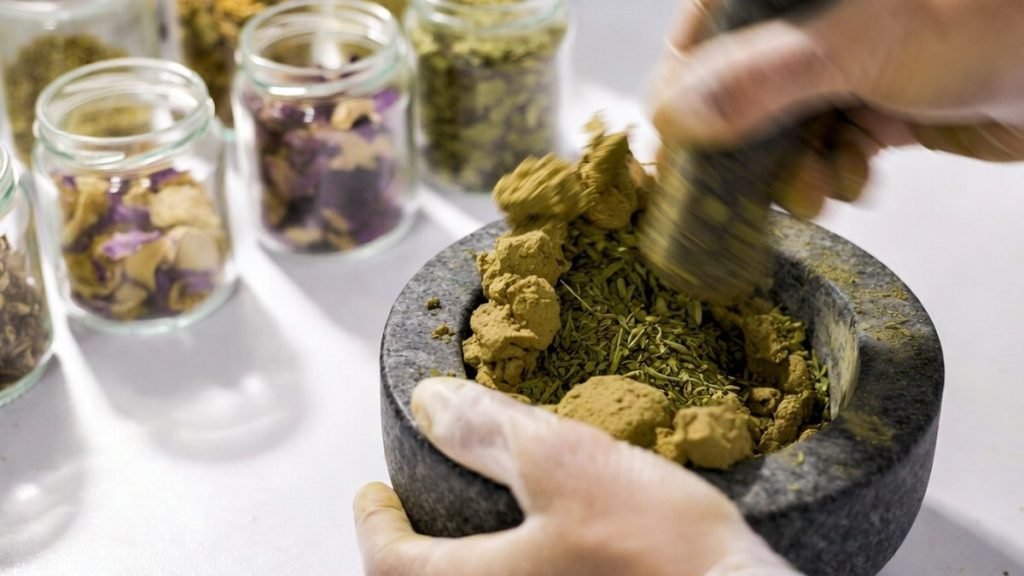
Sunil studied botany, grew up in the Himalayas, and has spent decades travelling to find plants himself. He consults horticulturists and plant scientists, and studies how the royal courts of China, Tibet, India and Egypt, as well as Roman and Nordic traditions, cared for the skin.
Some preparations are sun-dried. Others must be made fresh, and some are dehydrated and stored at a controlled temperature. All are prepared in his own lab under hygienic conditions.
“I find these plants myself, and I study how the kings and queens of China, Tibet, India and Egypt cared for their skin. Some preparations I make fresh; others are sun-dried or dehydrated and stored carefully in my lab.”
Sunil
Why the hands matter in a natural facial
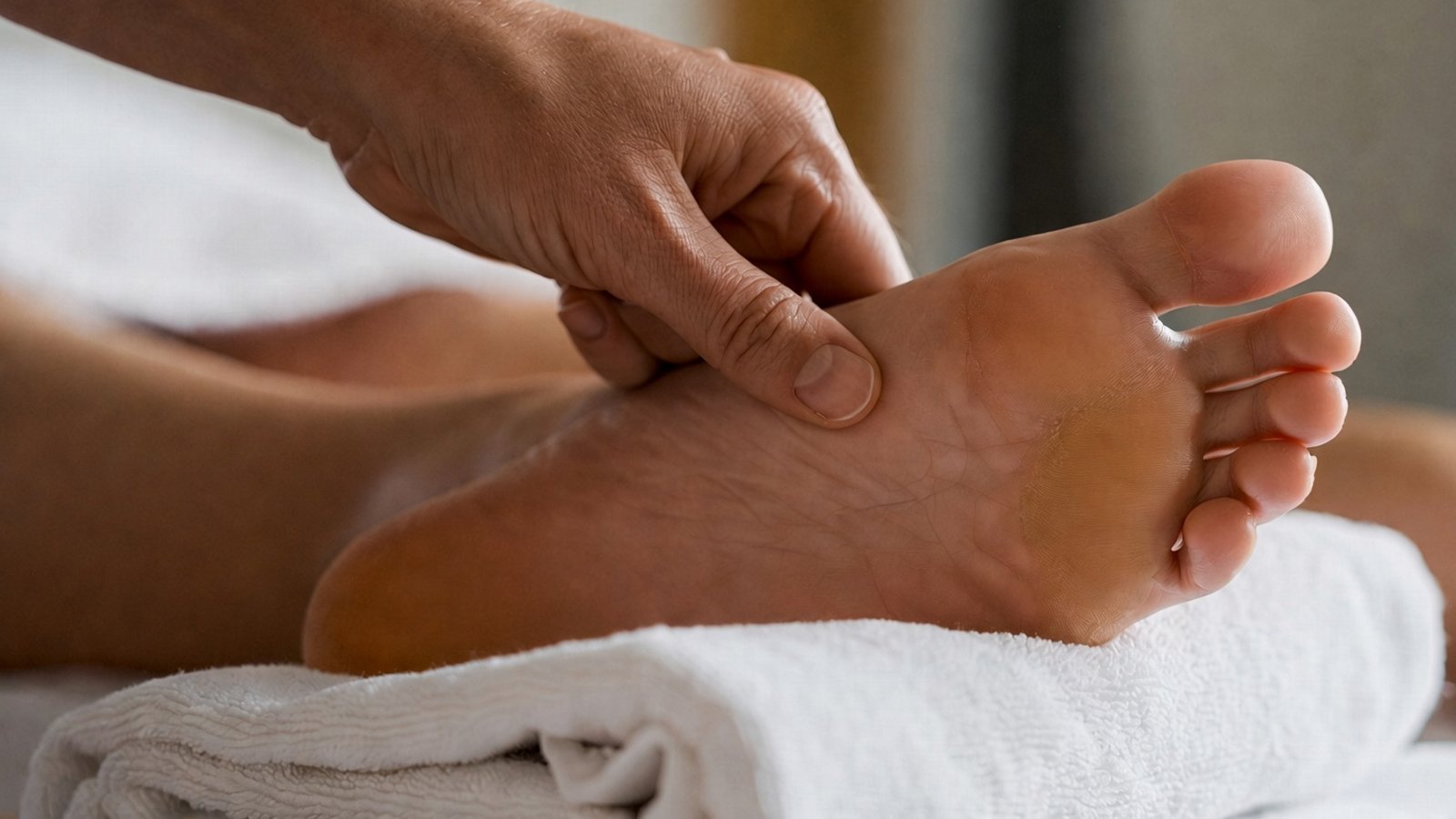
A natural facial relies on the hands because it uses no machines or peels. Sunil works the reflex and meridian points of the face, the same points used in face reflexology, and follows them with gentle, rhythmic strokes in the style of lymphatic techniques.
Pressure is light and slow, and the aim is deep relaxation as much as care for the skin. For more on how reflex points work, see the reflexology page. For the wider link between care and ageing well, read the Journal’s longevity and beauty article.
Who does an organic facial suit?
A plant-based facial suits people who prefer whole botanicals to synthetic actives, who would rather avoid machines and peels, or who want treatment at home rather than in a salon. Many of Sunil’s clients book before an event, a shoot or a public appearance.
How far ahead of an event should you book?
Give Sunil at least 24 hours’ notice, and ideally two days. The facial itself can be done on the day of the event, as little as an hour beforehand.
If it is your first Signature Sculpt™ facial, plan it a few days before an important event rather than on the day, after a patch test. That way you know how your skin responds before it matters.
Sensitive skin, allergies and why a patch test matters
Natural ingredients can still cause reactions. The American Academy of Dermatology notes that products labelled natural or clean can still irritate the skin. It recommends testing a new product on a small patch, such as the underside of the arm or the bend of the elbow, twice a day for seven to ten days (AAD).
If you have sensitive skin or known allergies, tell Sunil when you enquire, and ask for a patch test well before your first facial. Mention allergies to soy, plants or flowers in particular, given the natto, neem and rose. If you have a skin condition under treatment, broken or infected skin, or a recent cosmetic procedure, check with your dermatologist first.
Aftercare for the next 24 hours
There is no special aftercare. The preparations are natural, and you can carry on with your day normally, including going straight to an event.
If you notice redness, itching or swelling afterwards, rinse your face with lukewarm water, avoid applying other products, and message Sunil.
Frequently asked questions
Is the Signature Sculpt™ facial certified organic?
No. The preparations are made by hand for each treatment rather than sold as products, so they carry no certification mark. The ingredients and their sources are described above.
Does an organic facial use machines or peels?
No. Everything is done by hand with botanical preparations.
Is it suitable for sensitive skin?
It can be, but natural ingredients can still cause reactions. Ask for a patch test first and tell Sunil about any allergies.
How far ahead of an event should I book?
At least 24 hours ahead, ideally two days. The facial can be done on the day, up to an hour before, although a first facial is best done a few days earlier.
Can I have an organic facial at home?
Yes. Sunil gives facials at home across Mumbai.
Book an organic facial in Mumbai
Sunil gives the Signature Sculpt™ facial at home across Mumbai, and fees are agreed on enquiry. To book, or to ask about a patch test, visit the organic facials page or get in touch. Enquiries are by WhatsApp messages only.