
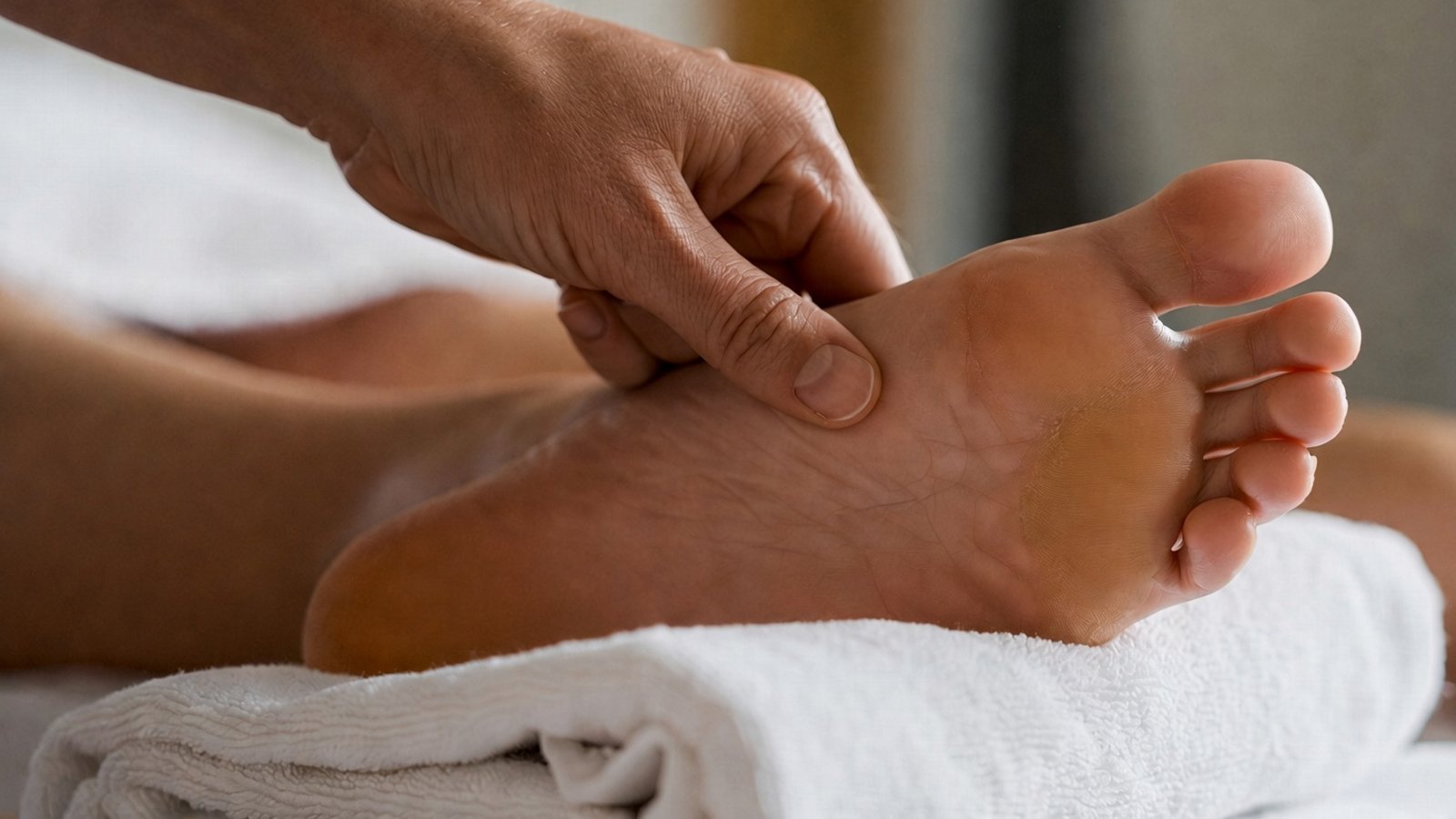
A foot massage relaxes the muscles of the feet. Reflexology applies precise pressure to specific reflex points on the feet, hands and face, with the aim of calming the nervous system and the body as a whole. The two can feel similar for the first few minutes, but they rest on different ideas and are done differently.
Many spa menus list reflexology when what they offer is a pleasant foot rub. This guide explains the real difference, what the research does and doesn’t show, and how to recognise a proper reflexology session.
What is the difference between reflexology and foot massage?
| Foot massage | Reflexology | |
|---|---|---|
| Aim | Relax tired feet and ease muscle tension | Settle the whole body through reflex points that, in the tradition, correspond to other areas and systems |
| Technique | Kneading, stroking and gliding, usually with oil or cream | Precise thumb and finger pressure on mapped points |
| Pressure | Broad and even across the foot | Focused and varied, point by point |
| Training | Varies widely, often general massage training | Specific training in reflex maps and technique, built up through practice |
| How it feels | Soothing and local | Some points tender, others barely felt; many people feel the effect well beyond the feet |
The simplest test is what the practitioner is paying attention to. In a foot massage, the foot is the focus. In reflexology, the foot is a map, and the practitioner is reading it.
What does the research say about reflexology?
The honest answer is that the evidence is mixed. A 2009 systematic review found 18 randomised trials that met its criteria. Only five reported positive results, and the review concluded that the best evidence did not convincingly show reflexology to be an effective treatment for any medical condition (Ernst, 2009). Many of those trials were of poor quality, and most of the better-designed ones found no benefit.
The picture is more encouraging for relaxation and sleep. A 2020 meta-analysis pooled 26 randomised trials involving 2,366 adults, and found that foot reflexology improved scores for depression, anxiety and sleep quality (Wang et al., 2020). Even so, the authors called for larger, better-designed trials with longer follow-up.
So reflexology is best understood as a way to relax deeply and sleep better, which is where the evidence is most reasonable, and not as a treatment for disease. It complements medical care; it does not replace it.
Beyond the feet: hand, face and back reflexology
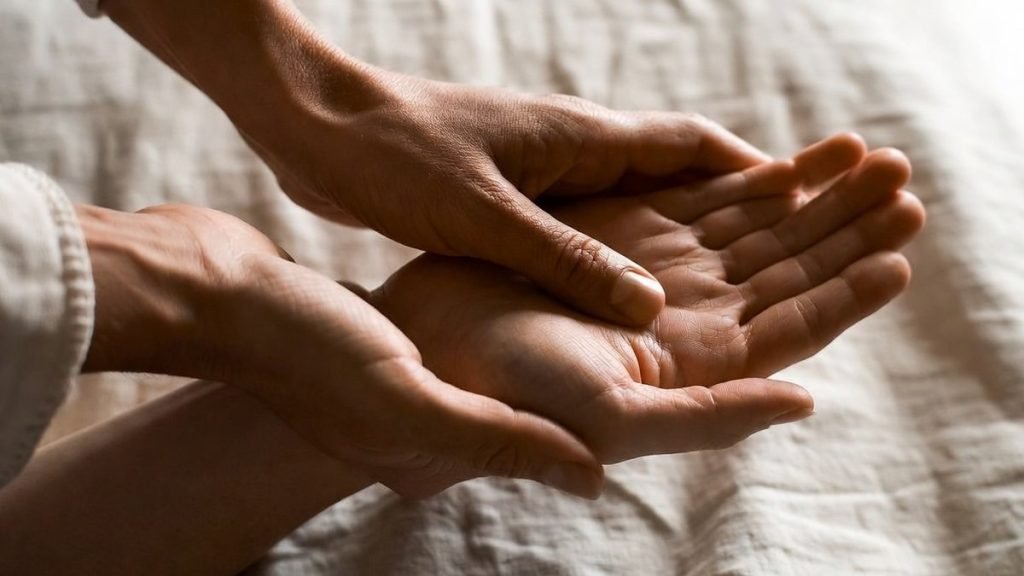
Reflex points are not only on the soles. Sunil also works reflex points on the palms, along the spine and across the face, where many traditional reflex and meridian points meet.
Hand reflexology helps when the feet are injured or very sensitive, and it needs almost no setting up. Face reflexology is gentler, and it is part of the reason the hands matter so much in Sunil’s organic facials.
For the history of reflex maps and how they developed, read Reflexology: Ancient Touch, Modern Healing.
What does a proper reflexology session look like?
A proper session starts with questions, not oil. You should be asked about your health, any medication and what you want from the session before anyone touches your feet.
How Sunil decides which points to work
Sunil decides where to focus from two sources: what you tell him in the consultation, and what your body tells his hands. Every person’s body is different, and so is the way their reflex points respond. No two sessions follow the same pattern.
As his hands move across the feet, palms, back or face, certain points respond through a change in texture, a tenderness, or the way the muscle reacts. Those responses guide where he stays and where he moves on. He also records each client’s progress session by session, so his choices draw on that record as well as on what he feels.
“After decades of this work, my hands act like a scanner. As they move, the points start to respond, and the body shows me where to go. It is intuition, but it is also knowledge, method and a great deal of recorded experience.”
Sunil
What clients notice after a first proper session
Clients often describe a deep calm and a lightness through the body, and some feel almost floaty for a while afterwards. Several have told Sunil they slept ten to twelve hours that night, and that their sleep settled into a steadier pattern over the following days.
Others notice that their breathing feels slower and easier, or that a normal appetite returns. These are what clients report, not promises, and everyone responds differently.
Questions to ask any reflexologist
Before booking, ask where the practitioner trained, how long they have practised, and whether they will ask about your health first. Ask how they decide which points to work, and whether they adjust pressure to you. A practitioner who cannot answer those clearly is probably offering a foot massage under another name.
Can you have reflexology and Shiatsu in one visit?
Yes, and many of Sunil’s clients do. Shiatsu works through the whole body on a mat. Reflexology then focuses on the feet, hands or face, and the two fit naturally into a single home visit.
The balance between them is set in the consultation, depending on what you need that day. If Shiatsu is new to you, the guide to Shiatsu at home in Mumbai explains what a session involves, and the Shiatsu page covers the details.
When should you check with a doctor first?
Reflexology is gentle, but some situations need a medical view first. Speak to your doctor, or your midwife if you are pregnant, before booking if any of these apply:
- You are pregnant.
- You have a foot injury, an open wound, or signs of infection such as swelling, heat or redness.
- You have problems with circulation in your legs or feet.
- You have diabetes and any foot problems, including numbness or cuts that are slow to heal.
NHS guidance lists foot ulcers and infections among the complications of diabetes, and advises seeing a GP or diabetes nurse about blisters or cracked skin on the feet, or about numbness and tingling, which can be signs of nerve damage (NHS). Reduced sensation matters here, because you may not feel pressure that is too strong. If you are unsure, mention it when you enquire.
Frequently asked questions
Is reflexology just a foot massage?
No. Foot massage relaxes the muscles of the foot. Reflexology applies focused pressure to specific reflex points, and it can also be done on the hands, back and face.
Does reflexology hurt?
It shouldn’t. Some points feel tender, especially where you carry strain, and pressure is adjusted as soon as you say so.
What should I wear?
Anything comfortable. For foot reflexology you only need to remove your shoes and socks.
Can reflexology help me sleep better?
Research suggests it may improve sleep quality, and many clients notice deeper sleep. It is not a treatment for a sleep disorder, though. If poor sleep has lasted for weeks, see a doctor as well.
Can I have reflexology on my hands instead of my feet?
Yes. Hand reflexology is a good option if your feet are injured or very sensitive.
Book a reflexology session in Mumbai
Sunil gives reflexology at home across Mumbai, on its own or alongside Shiatsu, and fees are agreed on enquiry. To arrange a first consultation, visit the reflexology page or get in touch. Enquiries are by WhatsApp messages only.